Every business that wants to grow needs a brand style guide.
Without a brand style guide, marketing materials will take on the style of the employee/freelancer/consultant, rather than looking like they were created by the same company.
A clear style guide helps teams speak with one voice, build trust, and strengthen brand identity over time.
Want to create a guide that keeps your brand unified and recognizable? Keep reading.
What is a Brand Style Guide?
A brand style guide is a document that outlines the rules and standards for how a brand presents itself, both visually and verbally.
It serves as a foundational reference that ensures anyone creating content or materials for the brand maintains a consistent look, feel, and voice across all touchpoints. Whether used by a designer, marketer, or copywriter, the guide helps everyone communicate in a way that accurately reflects the brand’s personality and values.
At its core, a style guide clarifies how a brand should appear and sound in various situations, from social media posts to corporate presentations. This consistency strengthens recognition and trust among audiences by making every interaction with the brand feel cohesive.
A typical brand style guide may cover high-level components such as:
- Logos and visual marks: Guidelines for logo usage, size, placement, and variations to preserve visual identity.
- Color palette: Defined sets of primary and secondary colors that represent the brand across digital and print materials.
- Typography: The typefaces, font sizes, and text hierarchy to use to maintain clarity and consistency in communication.
- Imagery: Principles on photography styles, iconography, and graphics that reflect the brand’s tone and aesthetic.
- Tone of voice: How messaging should sound, e.g., whether it should be friendly or formal, playful or direct, in order to align with the brand’s personality.
What’s the Point of a Brand Style Guide?
A brand style guide keeps every piece of communication aligned with the same voice, look, and attitude, no matter who’s behind the keyboard.
It brings structure to creative work and ensures that the brand is represented consistently across channels, from websites and emails to social posts and partner materials.
Without it, companies risk mixed messaging that confuses audiences and weakens credibility.
Consistency is key to recognition. When your language, visuals, and tone remain steady, customers can instantly identify your brand, even before they see the logo.
Also, the more consumers interact with elements of your brand style, the more familiar they get with your brand. That familiarity builds trust and helps your audience feel confident engaging with you. Over time, this recognition enhances recall, giving your marketing efforts long-term value.
A style guide also creates internal alignment.
Marketing teams, content writers, designers, and external partners often work on different projects at different times. A shared reference document keeps everyone on the same page by defining how to represent the brand accurately in every context. It eliminates guesswork, reduces revisions, and helps new team members adapt quickly.
Professionally maintained brands convey reliability. When everything from word choice to design spacing feels intentional, it signals attention to detail and care for the customer experience. That level of polish often translates directly into stronger trust and engagement.
A well-crafted style guide solves several operational problems that arise as businesses grow:
- Inconsistent branding: Prevents mismatched tones or visual styles across teams or campaigns.
- Inefficient collaboration: Reduces communication gaps between marketing, design, and external agencies.
- Brand dilution: Protects messaging from being altered by misunderstandings or ad hoc decisions.
- Rework costs: Saves time by setting clear expectations before projects begin.
- Customer confusion: Ensures the audience experiences one unified brand personality at every touchpoint.
The Basic Elements of a Brand Style Guide
A brand style guide has a few elements that play a specific role in maintaining clarity, cohesion, and trust across all touchpoints.
1. Logo Usage Rules
Logo guidelines specify how your logo should appear in different formats and environments. This includes minimum size, placement, spacing, and acceptable color variations. These rules prevent distortion or misuse, ensuring your logo remains recognizable and professional in every application, whether it appears on social media banners, print materials, or your website.
2. Color Schemes
A consistent color palette reinforces brand recognition by creating an immediate visual association with your company. Primary and secondary colors are defined with exact specifications (RGB, CMYK, HEX) for digital and print use. Consistency in color use helps unify marketing assets while inspiring the emotional tone that aligns with your brand personality.
3. Typography Guidelines
Typography outlines which fonts represent your brand across digital and offline platforms. This section designates font families for headings, subheadings, body text, and accents, along with rules for size, spacing, and alignment. Using defined typefaces ensures readable, attractive text that mirrors your brand’s character, whether modern and bold or minimal and refined.
4. Imagery Styles
Imagery guidelines describe the types of photos, illustrations, or icons that reflect your brand’s identity. This may cover preferred lighting styles, subjects, filters, framing techniques, or icon shapes. Visual consistency builds familiarity and supports storytelling by ensuring all visuals align with your tone and positioning.
5. Voice and Tone Principles
Defining voice and tone clarifies how the brand communicates across channels. Voice remains steady. It’s your consistent personality. On the other hand, tone adjusts by context (a blog may sound conversational while a policy page sounds formal). These principles help teams write clearly and on-brand every time, building trust through relatable communication.
6. Layout Templates
Layout templates outline structural standards for presentations, ads, social posts, email newsletters, and printed materials. They dictate margins, image placement, spacing ratios, and hierarchy of information. Templates enable creators to maintain uniformity without reinventing designs from scratch. This saves time while ensuring cohesive visuals across campaigns.
Editorial Brand Content Style Guide
When creating a style guide, many brands focus a lot on the look from a point of view of colours and typography, with less detail on the voice and tone. This bit is also very important.
Whether you are dealing with social media, traditional marketing, SEO, or email marketing, your tone, voice, use of paragraphs, and everything about your written and spoken content must be aligned.
Most teams create separate documents for their visual brand style guide and written style guide. In some cases, separate documents per channel to allow more detail for each team. Regardless of the approach you take, ensure all guides send the same message.
Elements of an Editorial Brand Content Style Guide
Brand Voice and Tone
Like the regular style guide, you need your brand voice and tone here as well, but in more depth.
Your brand voice is how your company “sounds” across every piece of communication.
Without guidelines, each writer naturally brings their own style. One might sound formal, another too casual. This inconsistency confuses readers and weakens your brand identity.
When documenting your voice and tone, describe who you are in simple terms, perhaps friendly, knowledgeable, supportive, or analytical, and show how that translates in writing.
Tone also changes depending on context. A blog post might adopt an educational tone, while a product page can be more persuasive.
Where possible, include good and bad examples of sentences. These help content creators to visualise what “on-brand” writing looks like and reduce guesswork.
You should also be clear about what is acceptable in terms of tone, e.g., Are you okay with the use of idioms? Passive or active voice? What words should be avoided?
Audience and Content Purpose
Before defining how to write or record, make it clear who you’re writing/recording for and why.
A strong style guide outlines your target audience in plain, useful terms. Describe their knowledge level, daily challenges, and what they hope to learn from your content.
For example, you might say:
“Our target audience is beginners to SEO. As such, explanations must be clear and avoid unnecessary jargon. Always consider if novices would find your word use confusing, and make things as clear as possible”.
Matching tone and complexity to your audience builds trust and relevance.
Also, explain the purpose of each type of content and/or channel, e.g., is YouTube only for educational videos? Is the purpose of your blogs to generate leads, strengthen authority, or something else?
When content creators understand both the audience and the purpose, they create sharper, more useful, and strategy-aligned content.
Research and Source Guidelines
Strong content starts with solid research. Readers and viewers expect accuracy, especially when consuming educational or data-driven material.
A style guide should define how marketers verify information. What sources are accepted? Which should not be trusted?
Content Types and Their Structure
Different types of content serve different purposes. Your guide should show team members how to approach each one with the right structure and style.
For instance:
- Guides explore broad topics in detail, step by step.
- Question-based articles answer a single query clearly, then expand on related insights.
- Case studies tell structured stories with results and takeaways.
Define how each content type should flow, from start to conclusion. When your marketing team knows what structure to follow, your audience enjoys a smoother, more consistent experience.
Clear structures lead to coherent storytelling and naturally improve results.
Content Structure and Layout
This is usually needed for teams that write blog posts or create long-form videos.
Consistency in structure makes content easier to follow.
A style guide should provide every writer or video creator with a simple framework to use, so consumers encounter familiar patterns across content.
State what makes a good layout for you. Provide examples of the good layout, whether that be a link to an already published blog or video, or text in your content style guide.
In your formatting, also consider including a section on headings. This is especially important for teams that do SEO content. Headings guide the reader through your content. They make information easier to scan and improve search visibility. Define clear hierarchy rules: one primary heading (H1) for the title, secondary headings (H2s) for major sections, and subheadings (H3s or H4s) for smaller topics. Also, state what each heading should be about and how they should be written, e.g., do you use phrases, questions, or one-word only in your headings?
In addition to headings and layout, you also need to include examples of how to end the content and how to convert consumers. This all depends on your goals. For example, an e-commerce business might want links to products within an article so users can go purchase when they get to that section. On the other hand, a technical product business might prefer only one or two CTAs, with one at the end of the content to direct users to sign up. Basically, explain when and how to include CTAs, whether at the start, throughout the article, or in the closing section, as well as the tone to use in CTAs.
Writing Style and Language Rules
Your brand content style guide should define your preferred spelling (e.g., if English, state the type – American, Canadian, British, etc.), capitalisation habits, and phrasing conventions.
Simple rules, like whether to write “log in” or “login,” or when to capitalize plan names, seem small but add up across hundreds of pieces.
The goal is for every article, email, and page to speak with one consistent voice.
Grammar and Punctuation Standards
Good grammar builds trust. Your style guide should outline essential grammar and punctuation preferences so all writers stay consistent.
Examples:
- Always use the Oxford comma.
- Keep sentences concise.
- Use complete sentences in lists only when necessary.
- Spell out numbers from zero through nine; use digits for 10 and above.
Set these conventions early so writers spend less time second-guessing and more time crafting quality content.
Metadata and SEO Standards
Search optimization starts with clarity. A style guide should explain how to write accurate, engaging metadata for each piece.
Include best practices for title tags, meta descriptions, and keyword placement. For example, specify ideal character counts and how to integrate search terms naturally.
How to Create a Brand Style Guide
Building brand style guidelines from scratch starts with understanding where your brand currently stands and what it represents.
Begin by conducting a comprehensive brand audit. Review existing materials, such as logos, website pages, email templates, social media content, and printed assets, to identify inconsistencies or outdated styles. Take note of what already works well and where improvements are needed.
Next, define your core values and aesthetics. Establish how your brand should make people feel and how that should translate visually and stylistically. Clarify your brand’s mission, personality traits, tone of voice, and visual direction. This ensures every choice you make later reinforces a unified brand identity.
Once your vision is clear, gather all existing design and communication assets to maintain a single source of truth. Organize them logically for easy reference:
- Company logos in multiple formats (SVG, PNG, JPG).
- Color codes in HEX and RGB values.
- Fonts used for print and digital platforms.
- Photography or illustration guidelines.
- Writing samples that demonstrate preferred tone or style.
With your assets collected, focus on writing clear and concise rules that explain how each element should be used. Avoid unnecessary complexity; the goal is to make the guide functional for everyone, from new hires to external collaborators. Use plain language and describe why certain choices matter, not just what they are.
As mentioned earlier, you might want to create different versions for each team, e.g., one for video content, one for the design team, and one for SEO/written content, to ensure depth in each document without causing unnecessary long reads for each team.
Decide on the right format for accessibility and use. A web-based digital version works well for collaborative teams who update content regularly. A PDF version may suit companies needing downloadable or offline access. Whichever you choose, ensure it’s easy to navigate with clear sections, a table of contents, and consistent labeling.
Before finalizing the document(s), secure stakeholder approval from marketing leads, designers, writers, and leadership teams. Their sign-off ensures alignment across departments and gives the guide authority within the organization.
To maintain long-term consistency, establish an efficient documentation process:
- Update the guide whenever new elements are introduced or old ones are revised.
- Assign ownership to someone responsible for maintaining version control.
- Use feedback loops so team members can suggest updates when they notice inconsistencies.
- Review the guide quarterly or biannually to confirm that it still reflects the current brand direction.
17 Best Brand Style Guide Examples
Some brands publish parts of their style guides for partners and the media, while others keep detailed internal documents used by marketing, design, and content teams.
Below are 25 examples of brands that have built cohesive identity systems. Each one brings together visuals, tone of voice, and consistent content practices that reinforce trust and recognition. Studying how they structure their guides can help you shape or refine your own brand or content style guide.
Google’s brand system sets one of the highest standards in the world. The guidelines focus on logo usage, product icons, typography, and color consistency to ensure recognizability across all touchpoints. The company also sets clear rules for how its trademarks and logos may appear externally, protecting against confusion or implied endorsements.
Google also has a public editorial style guide to assist writers when creating technical documentation for their audience. This guide is a good example of an editorial style guide for marketing teams. Internally, Google’s design and marketing teams use detailed content and design standards to maintain clarity and simplicity across its product ecosystem.
Apple
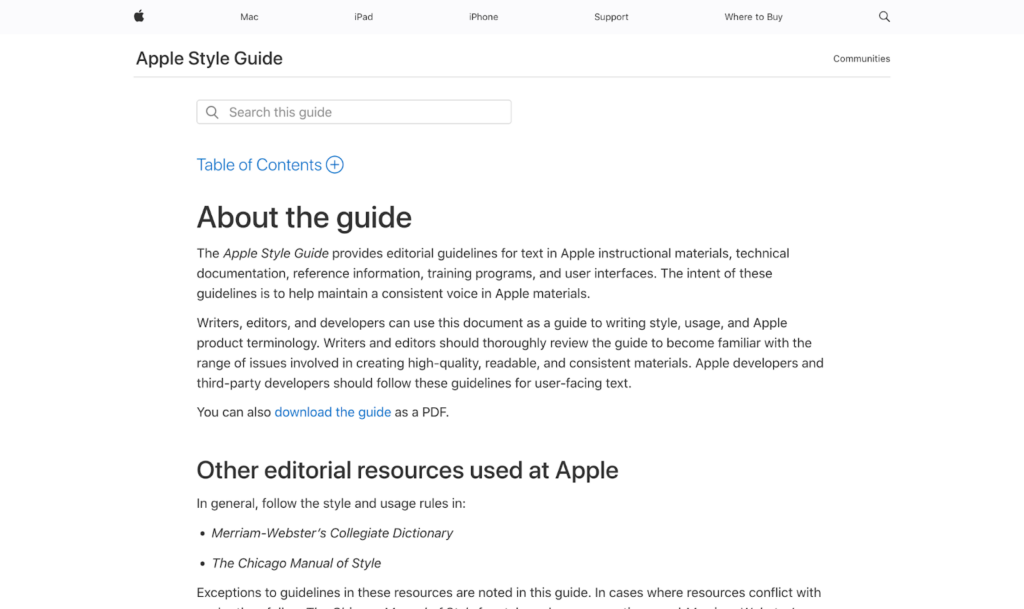
Apple’s editorial style guide explains how the company writes about its products and features. The guide covers topics such as product names, capitalization, terminology, and writing clarity to ensure consistent communication across documentation and marketing.
Apple’s writing style is simple and direct, avoiding unnecessary jargon and keeping sentences clear and concise. This reflects the same design philosophy seen in its products: straightforward, intuitive, and user-focused.
Spotify
Spotify doesn’t have a publicly available marketing style guide, but it does have one for developers integrating Spotify into their products. That guide blends bold visuals with a friendly, conversational voice. From its signature green color to typography and mobile design systems, every detail supports accessibility and rhythm. The depth of that document shows the brand cares about consistency and wants to feel human, creative, and culturally aware.
Mailchimp
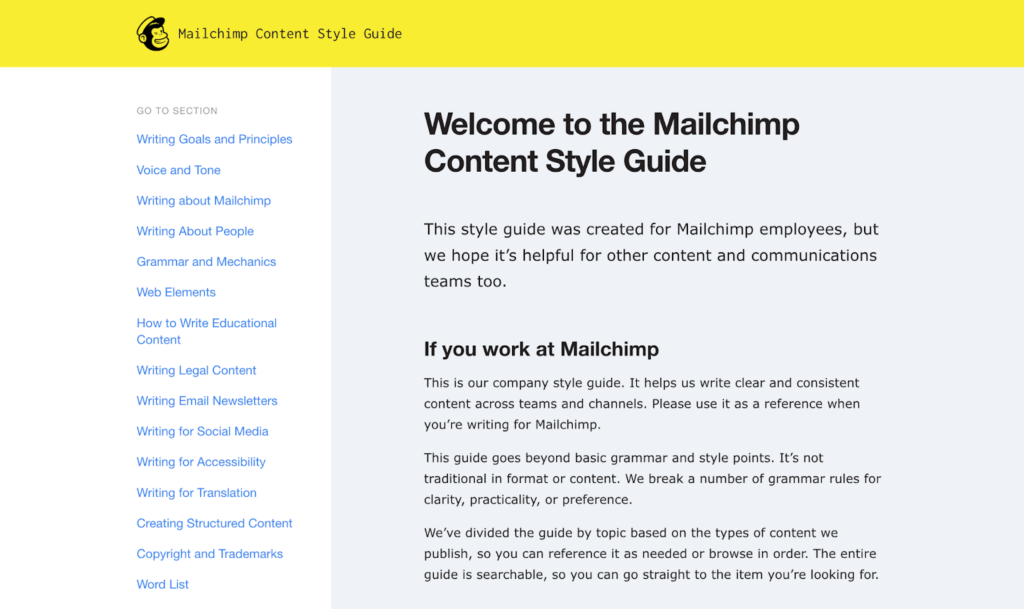
Mailchimp’s content style guide is one of the most comprehensive public examples available. It clearly explains how the brand’s tone should adapt across different contexts while staying warm, clear, and human. It also outlines standards for illustrations, typography, humor, and inclusive language, serving as an exceptional reference for content marketers.
Coca-Cola
Coca-Cola protects one of the world’s most recognizable visual identities. The brand’s messaging emphasizes joy, unity, and connection, values central to its global image. Its consistency across countries and marketing agencies has inspired books on its style.
Dropbox
Dropbox uses expressive design to reflect creativity and productivity. Its brand system explains how illustrations, color palettes, voice, and typography work together to create a friendly, professional identity.
Messaging remains simple and accessible, ensuring a user-first approach across content and product experiences.
Microsoft
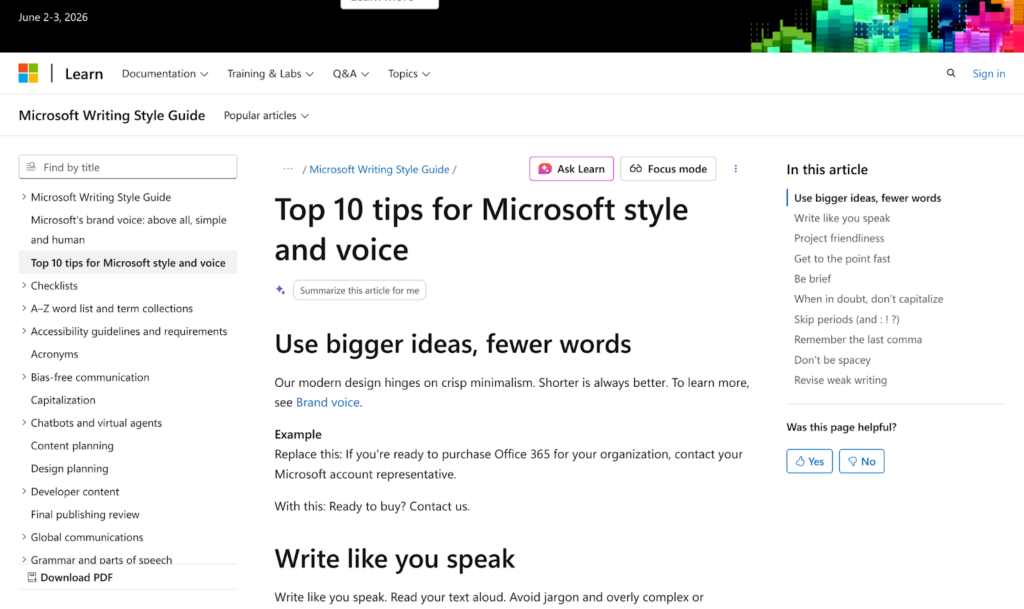
Microsoft is another company that has done well with a well-structured style guide for content marketing teams. The Microsoft Writing Style Guide provides a comprehensive guideline used across documentation and product content.
It focuses heavily on:
- Clarity
- Accessibility
- Conversational tone
- Inclusive language
- Terminology consistency
It’s widely used in technical writing, product marketing, and product documentation.
Atlassian
For Atlassian, it’s about ensuring that every employee who designs or markets an app UI (in its ecosystem) follows a consistent voice, look, and feel.
The Atlassian style guide covers the components discussed above, including tone and voice, grammar rules, language, writing standards, consistency in the use of time and dates, UI words, typography, and everything related to brand communication.
Salesforce
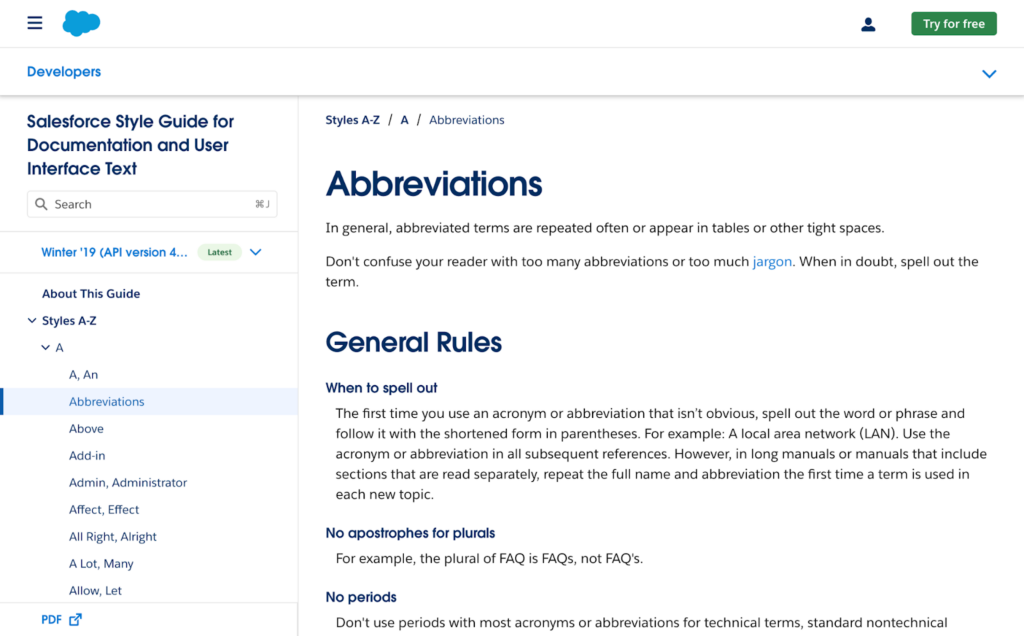
Salesforce has a public content style guide that cuts across teams and roles, including editors, proofreaders, technical writers, product managers, developers, UI professionals, and curriculum developers. It is quite detailed, explaining how terms can be used, accepted grammar, abbreviations, and so on.
Adobe
Adobe’s brand guidelines celebrate creative freedom while enforcing visual consistency. Typography, color systems, and icons align across its suite of tools. The brand voice remains confident yet educational, motivating users to create and innovate.
Adobe’s guidelines emphasize consistency and creative freedom. They detail color systems, typography, iconography, and branding across its suite of design tools.
Because Adobe serves creative professionals, its voice encourages inspiration through clarity, education, and motivation, without unnecessary complexity.
IBM
IBM’s Design Language is one of the most sophisticated corporate systems available. It covers modular components, accessibility, motion principles, and typography. IBM’s written voice remains expert and reliable, reinforcing innovation through clarity.
Uber
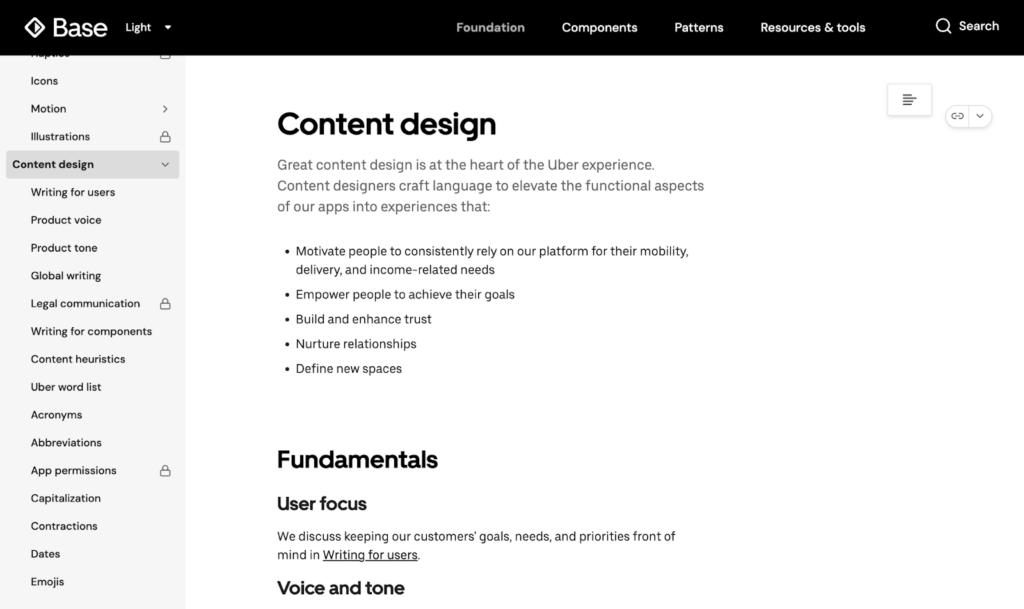
Uber has one style guide that covers both design and content. It’s quite detailed to ensure that its customers consistently rely on its platform for their mobility and delivery needs. It covers tone, heuristics, contractions, and more to ensure that every UI and marketing material can nurture consumer relationships and enhance trust.
HubSpot
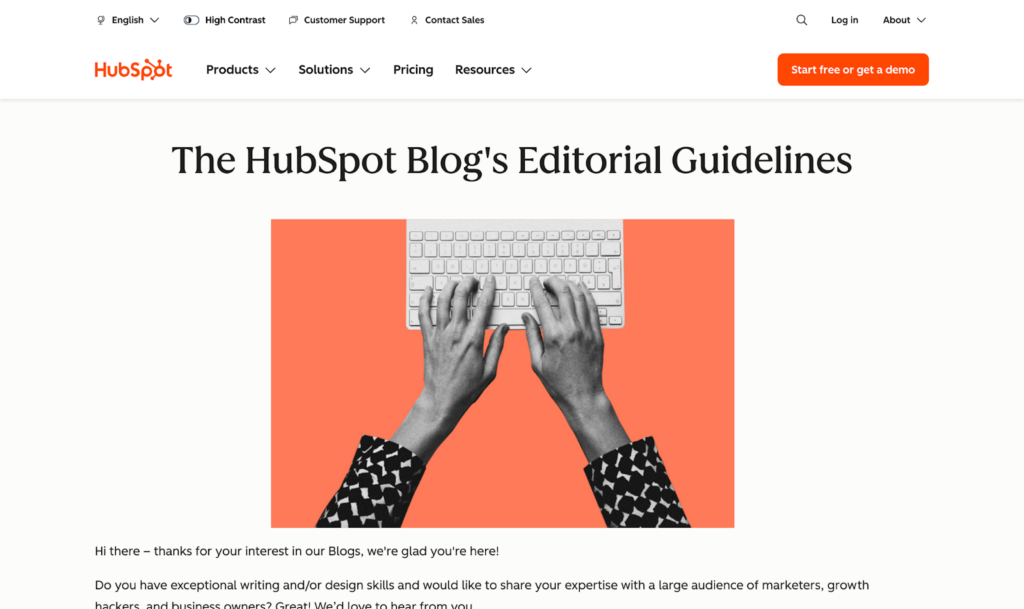
Unlike most of the brands discussed so far, HubSpot did not publish its internal brand style guide. However, it has a basic content style guide for contributors to its blog.
The focus is on guiding contributors to submit the right type of post (e.g., not offensive or overly promotional) and in the right format (including the use of heading structure, appropriate paragraph length, lists, and conclusions).
If you are just growing your marketing team and do not have enough time for a fully-fledged brand style guide like some of the examples explored so far, the HubSpot guide can be an inspiration for creating a one-page brand style guide.
Amazon
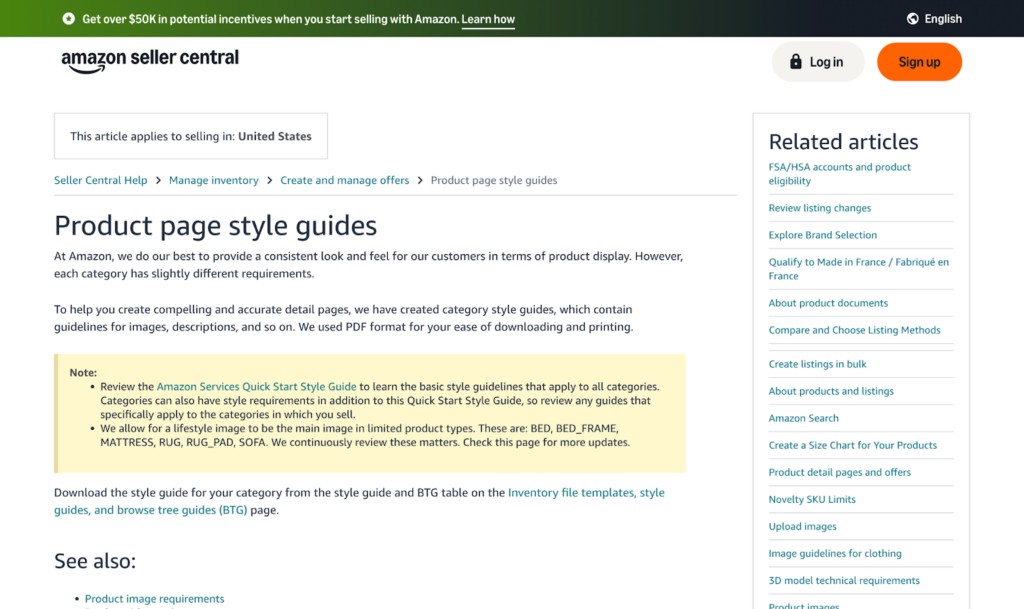
Amazon has different style guides for developers, authors, and merchants. Amazon defines functional consistency as clarity, with customer-first phrasing in all documents. This aligns with the suggestion above to create separate style guides for different audiences or teams, ensuring depth in each. When creating different style guides, ensure that, at its core, all documents showcase or propose a consistent look and feel for the brand.
Github
GitHub has a large community, yet most documentation looks similar, and its own documents have the same structure and feel. The reason for that is the GitHub style guide for documentation and product writing.
That document guides developers and technical writers in creating documentation, READMEs, and other files on GitHub, as well as marketing content for their tools and repositories. It, alongside Microsoft’s style guide, also guides GitHub teams on grammar, tone, capitalization, and technical writing conventions.
WordPress
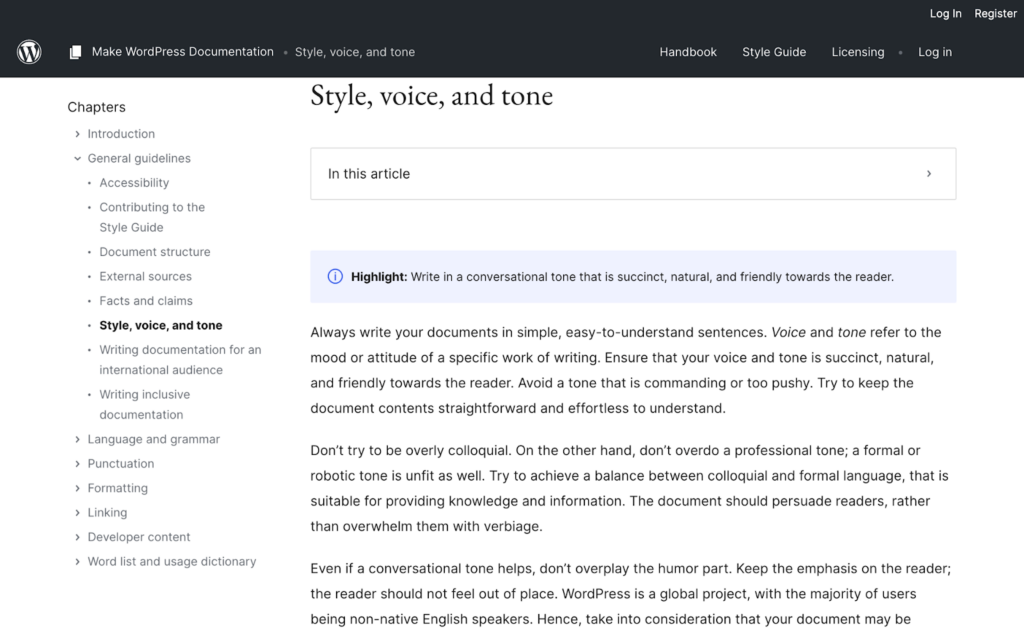
Like Amazon, WordPress has a style guide for different teams. The SEO content team has one, and developers have another. Having seen both, one thing that is clear to me is that they are consistent in language, style, tone, and instructions. For WordPress, content should be succinct, friendly, and clear, regardless of the consumer’s English proficiency, whether the material is documentation or a blog post.
GOV.UK
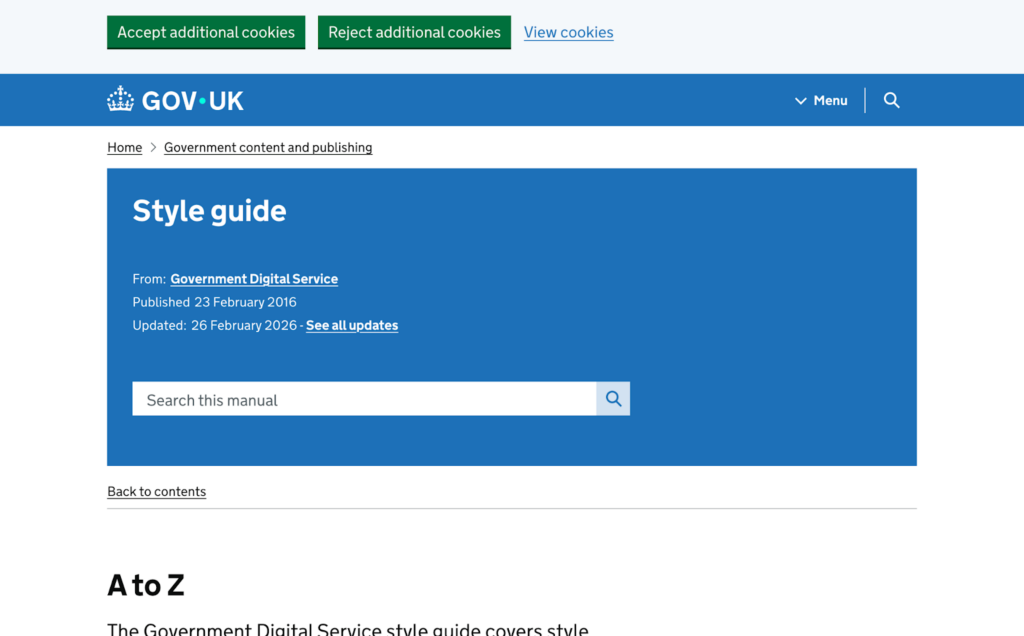
The majority of examples provided in this blog are tech companies because they tend to publish style guides more often than other industries. GOV.UK is an exception where a government has a style guide on how content should be written and the brand presented for all content published on the gov.uk website.
The gov.uk style guide is quite in-depth, ensuring that, regardless of the number of employees who write content or when they are hired, consistency is maintained.
Ready to Create Great Content?
We have reviewed how to create a brand style guide with an emphasis on the marketing team. Detailed examples have also been provided to show how to structure a brand style guide to maintain your own strong presence.
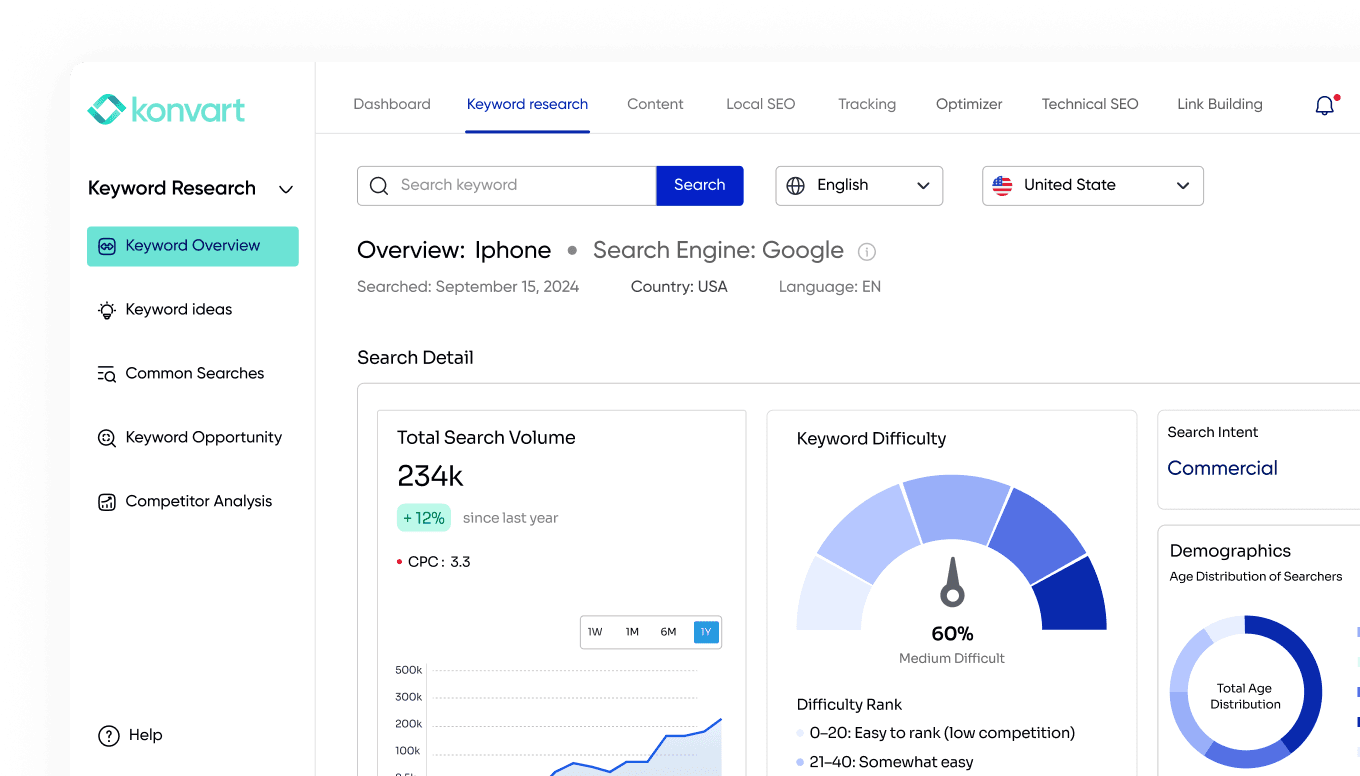
Once you’ve created a brand style guide, share it with your marketing team and ensure team leaders adhere to it when reviewing any marketing materials. Furthermore, you can upload your brand style guide (editorial or content style guide) to Konvart’s Custom AI tool to get AI-written SEO content that is tailored to your brand. Sign up today to try it for free.