Answer Engine Optimization (AEO) is the process of tailoring your website content to rank in conversational, answer-based search results, especially those generated by AI search engines like ChatGPT, Google AI Overviews, and Gemini.
Unlike traditional SEO, AEO focuses on delivering direct, concise, and authoritative responses that position your brand as the go-to source for information.
With AEO, you can gain better visibility, credibility, and traffic from the billions of customers who use AI to search.
What is Answer Engine Optimization?
AEO is simply about optimizing to show up when consumers search with AI.
The focus of AI search is on understanding user intent and returning precise, conversational responses within the same interface. The purpose of AEO is to ensure content provides clear, contextually relevant information that can be easily drawn on when an AI model or voice assistant responds to a question.
AEO aims to build content that aligns with how people naturally ask questions, whether through typed search queries or spoken language interactions. This is because generative AI systems interpret meaning, relationships between entities, and contextual relevance to determine the best possible answer.
Answer engines rely on structured and semantically rich content. Businesses and content creators can improve their AEO performance by ensuring their information is accessible, factual, and easy for AI systems to extract. This goes beyond keyword use; it focuses on clarity, question relevance, and the ability of algorithms to identify the most authoritative response.
Key characteristics of answer engine optimization include:
- Focus on Natural Language Understanding: AEO is built for AI models that interpret the semantics of a query rather than just match keywords.
- Adaptation to Conversational AI: AEO ensures content can be used by assistants and chat interfaces to provide coherent responses.
- Relevance to Large Language Models: AEO supports the input-output logic of LLMs by providing structured, well-defined data that can be used to inform answer generation.
- Emphasis on User Context and Intent: Content is created and presented to respond precisely to the intent behind a question, not just its literal phrasing.
To be clear, traditional search engine optimization still matters, and in many ways, SEO and AEO are intertwined, and you will see that when we explain how to do AEO.
Why is AEO important?
User behavior has shifted from traditional keyword searches on Google or Bing search toward conversational interactions and direct answers.
ChatGPT has over 1billion monthly active users; that is more than the number of people searching on Bing and about 25% of those who use Google, and that number keeps growing. Note that this is only ChatGPT; there are several other LLMs, each with millions or billions of users.
Therefore, businesses must align their content strategies with how people engage with modern search.
AEO allows businesses to position their content where users increasingly seek immediate, authoritative responses rather than browsing multiple links.
If you can do AEO right, you will enjoy these benefits:
- Elevated brand authority: Brands can appear as trusted sources in AI search. This reinforces credibility and expertise, which builds long-term trust with potential customers.
- Increased visibility in zero-click searches: Many search interactions no longer lead to traditional website clicks. AEO ensures your brand message is embedded within these instant results, helping maintain strong visibility even when users do not navigate away from the platform.
- Enhanced user experience through contextual relevance: AEO emphasizes intent-based optimization, ensuring content aligns with how real people phrase questions and seek answers. This relevance improves user satisfaction and signals to AI systems that your brand provides helpful, dependable information.
- Greater integration with emerging search models: Search engines are now multi-modal answer ecosystems, and brands optimized for AEO are better prepared to appear in platforms that merge text, image, and voice-based interactions, securing a competitive position in new digital spaces.
How is AEO different from SEO?
Answer Engine Optimization (AEO) and Search Engine Optimization (SEO) both aim to increase visibility and relevance in search environments, but they are not the same.
The difference lies mostly in how the systems interpret data and present information to the user.
Differences in the way they decide on the data to provide
In SEO, the goal is to help a webpage rank higher in a search engine results page (SERP) such as Google or Bing. Search engines rely on crawler-based indexing and ranking algorithms that assess keyword relevance, backlinks, domain authority, and technical accessibility. Optimizing for SEO means ensuring that a site is easily discoverable, clearly structured, and aligns with known ranking signals.
AEO focuses on how content is interpreted by AI-powered answer engines such as ChatGPT and Microsoft Copilot. Although these systems can provide a link in their response, it is not always the case, so your “ranking” or citation here might be a brand mention alone, which can result in more brand recall. Also, AI systems synthesize direct answers drawn from various indexed sources.
The emphasis in AEO is on context, factual accuracy, and the clarity of structured data, which allows an AI model to understand and restate information reliably.
Also, AI tends to use consumer data for brand recommendations more than a regular Google search does.
For example, if you search Google for “best brand for X”, it will show those that have done well in SEO, not necessarily the best brand for X. That means the better backlinks, content, technical, etc. The only time that might not be the case is if it’s a local search; in this case, you’ll see the map listings, which are often ranked according to distance, aggregate reviews, and number of reviews.
A search on ChatGPT for the best brand for X will likely return results based on what people say about the brand on forums like Reddit and reviews on platforms like Trustpilot, rather than on who has the best backlinks.
Nevertheless, there are overlapping areas when it comes to AEO and SEO; for example, obtaining backlinks and brand mentions still help you become more relevant for both, especially for informational queries.
Also, both rely on high-quality, trustworthy content that demonstrates expertise, experience, authority, and trustworthiness (E-E-A-T).
Differences in search intent
In SEO, queries are often navigational, informational, transactional, or commercial, and users expect to choose from a list of website results. In AEO, queries are conversational, task-based, or explanatory, and users expect the system to generate a clear, authoritative answer without requiring further clicks.
Answer engines process natural language with semantic analysis, interpreting the nuance, relationships, and context of a question rather than matching keywords.
Data structuring and content accessibility
Search engines index URLs and evaluate structured data markup to organize information within their result sets. Proper use of schema, metadata, and internal linking improves how a site is understood and ranked.
Answer engines take a step further by parsing both structured and unstructured data using large language models. The model identifies key entities and their relationships, referencing facts that appear across multiple reputable sources. Content that uses precise schema markup, consistent terminology, and context-rich explanations is more likely to be cited as an answer reference.
AEO benefits from well-labeled data and semantically clear copy that facilitates AI reasoning. Inline definitions, concise summaries, and context-specific phrasing enhance an AI’s ability to extract useful insights correctly.
User interaction and output presentation
SEO results direct users toward websites for further reading, shopping, or engagement. Interaction happens after a click, making the website’s usability and conversion design crucial.
In AEO, user interaction occurs in the conversation. The AI response may reference a brand or content source without sending the user directly to a website. This connects to my previous point about brand recall and visibility being more relevant to measure using AEO rather than direct clicks from AI chat responses. Research has shown that when AI cites a brand, branded searches (on search engines) and direct traffic to the brand’s website tend to increase.
Whether ranking on Google or being cited by ChatGPT holds the same or different value is yet to be concluded. A study will need to examine this to determine whether more or fewer conversions occur in either scenario.
Nevertheless, my advice is to treat both like any other marketing channel: work on them to gain visibility whenever your customers are searching, attract more customers, and drive growth.
General thoughts on AEO vs SEO
| Aspect | AEO | SEO |
| Core Audience | People using conversational interfaces, voice queries, or AI chat platforms seek direct, concise answers. | People are typing or browsing through search results for comprehensive information and multiple result options. |
| Output Format | Delivers single, direct responses designed to answer a query immediately in a voice or text-based AI output. | Generates ranked lists of clickable web pages, focusing on meta titles, snippets, and overall page visibility in SERPs. |
| Optimization Focus | Structured data, natural language clarity, and query intent | Keyword targeting, backlinks, on-page optimization, and technical site performance |
| Primary Goal | To be the definitive answer a user receives from an AI system or voice assistant. | To increase visibility, clicks, and traffic from search results pages. |
| Measurement of Success | Citations (brand name or links), AI-referral traffic, branded searches | rankings, organic traffic, and engagement metrics like click-through rate (CTR) |
How to integrate AEO using traditional SEO strategies
Start by mapping your current SEO workflow from keyword research and content planning to on-page optimization, then embed AEO principles at each step.
1. Combine AEO elements within your ongoing SEO process
Enhance the structure and meaning of your existing content without disrupting successful ranking strategies. Focus on the following actions:
- Incorporate structured data through schema markup like FAQ, HowTo, Product, and Organization types to help search engines interpret your content’s intent.
- Audit and rewrite important pages to answer specific user questions succinctly, and add those answers naturally to existing paragraphs.
- Expand keyword research to include conversational and long-tail queries, noting how real users phrase questions in search or voice interactions.
- Use topic clusters around core subjects so AEO-ready content supports SEO pillar pages, improving both topical authority and internal linking logic.
2. Leverage structured data to clarify meaning and enhance visibility
Structured data is the bridge between human-readable and machine-readable information. We already use it for SEO, but more often than not, it’s used in SEO with the goal of gaining a rich snippet. For AEO, the purpose is machine-readability.
The first step is to identify which existing pages can benefit from schema markup updates.
If you are confused about how to decide this, use Konvart’s Technical Gap tool to compare your schema vs top competitors and get ideas from what they do.
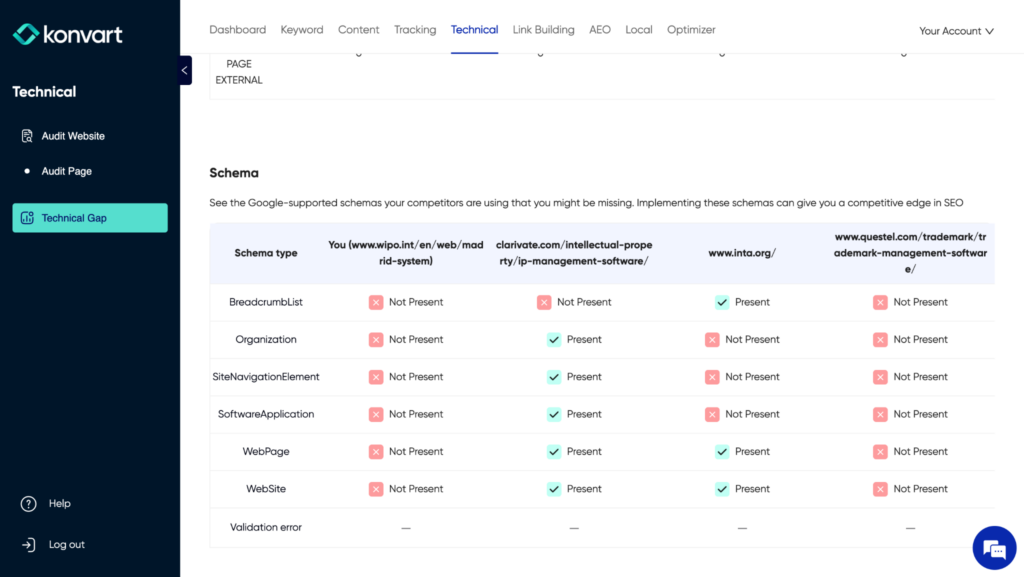
Based on the screenshot above, we could add organization, breadcrumblist, software application, and webpage schema to our page. Of the four, organization and software application are the most important for AEO based on that analysis.
Another way to get more would be to review the purpose of that page and your business/website, and consider how you could explain that information more clearly to machines. Map structured data fields to business objectives like highlighting pricing, services, locations, or reviews, ensuring consistency with your brand’s overall message. For example, a law firm might add legalservice, Q&A, organization, article, author, and localbusiness schema, depending on the page, whereas an ecommerce brand will focus more on product, review, FAQpage, article, and author schema.
Implement schema types that enhance clarity, using Google’s Structured Data Testing Tool or equivalent validators to confirm correctness.
3. Build on long-tail and conversational query optimization
Traditional keyword strategies often focus on search volume and competitiveness. AEO integration focuses on real, natural-language questions that users might ask virtual assistants or AI search interfaces.
Here’s how to ensure you have covered those keywords:
- Expand keyword lists to include question-based formats like “how to,” “what is,” and “where can I,” reflecting semantic intent.
- Adjust content briefs to ensure each article answers high-probability user questions efficiently and in clear, plain language.
- Track AI query trends using the “People Also Ask” and “Featured Snippets” sections in Google to identify gaps where your brand can earn visibility.
- Use those phrases to reinforce content relevance and direct answers without over-optimizing or sounding repetitive.
For all four steps, you can use Konvart’s content and keyword research tools. Here it is step-by-step.
As a first step, go to Konvart’s Common searches and questions tool and enter your main keyword to expand your list to include question-based terms. You will find questions on the Common Search (Questions) tab.
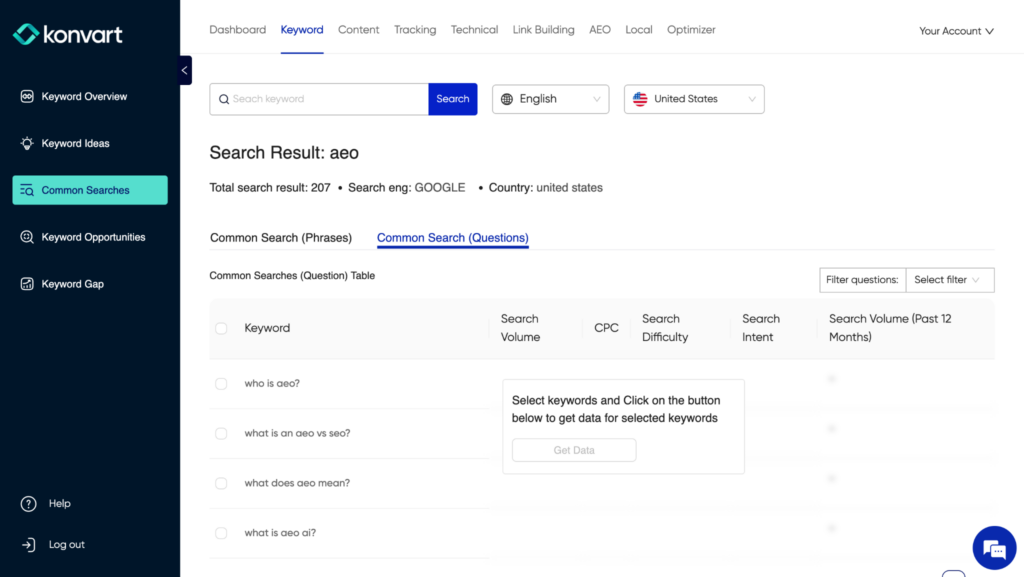
These are curated from real-world searches using data from People Also Ask and Google Auto-complete. To get an estimate of search volume, click “Get data”. For AEO, that is not necessary, as the keywords alone being on the list tell you people search for them.
For the second step, go to Konvart’s Content Editor or Content Brief. Enter your keywords, select your top competitors, and see the suggested headings and questions. These headings are usually based on SERP analysis, but they ensure 100% topical coverage, which ensures AEO.
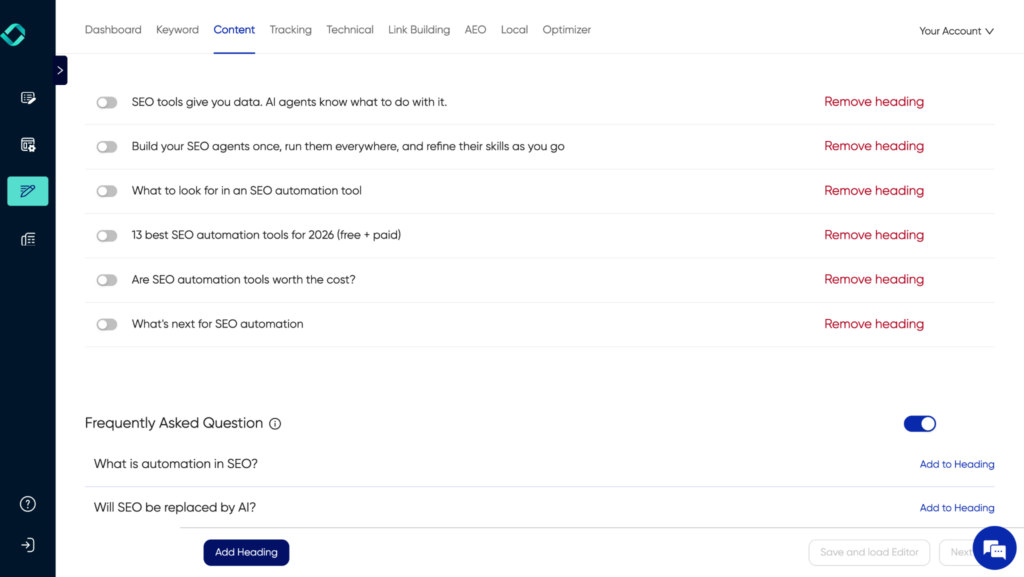
The second step also covers the third step regarding FAQs and featured snippets because the headings and questions presented are based on competitor analysis, SERP analysis, and topical relevance and coverage.
For the fourth step, Konvart can also ensure you use the phrases and topics by either writing them for you using Konvart AI Writer or the Custom AI Writer, or by checking that you have covered them when you paste or type your content in the Content Editor.
4. Improve clarity and structure of existing SEO assets
Answer engines require precision and context. Revisiting your top-performing content to optimize it for machine interpretation yields compounded visibility benefits.
- Rewrite meta titles and descriptions to mirror concise, question-driven formats that AI crawlers can easily interpret.
- Reorganize long-form articles with clear subheadings, bullet points, and short sentences to make answers accessible to both users and AI models.
- Incorporate clear definitions, summaries, and contextual links throughout the text to reinforce meaning across multiple content touchpoints.
- Use accessible formatting such as tables, lists, or step-by-step breakdowns, which help both human readers and AI recognition systems.
Key strategies and best practices for optimizing for AEO
Above, I showed you how to integrate AEO into SEO. However, as stated earlier, while there can be overlap with SEO, it does not apply to every aspect of optimization. Therefore, this section will cover strategies to optimize your website for AEO, so you are 100% covered.
1. Use concise but comprehensive summaries
Provide short, information-dense summaries that directly answer the core question. The goal is to make your content easy for AI models and search engines to extract as a stand-alone response.
Begin each main section or paragraph with a one- to two-sentence answer to the query. For example, if your H2 is “What is Answer Engine Optimization?”, instead of writing “millions of people use AEO and I will explain what it is below”, answer directly by defining AEO: “AEO is optimizing…”
Additionally, de-fluff your content. This ensures it is concise while staying comprehensive. There’s no need to drone on and on when it is unnecessary to pass your point. Humans hate it; AI hates it; search engines hate it.
By comprehensive, I mean providing the most in-depth response without droning on. By answering the questions straightaway, you ensure that your content is selected as the best answer for that query and cited as a source (if not already mentioned).
In addition to the above, do the following:
- Use natural phrasing that mirrors how users ask questions, such as “What is…,” “How does…,” or “Why does…”.
- Keep sentences under 25 words and maintain scannability through short paragraphs and bullet lists.
- Maintain factual neutrality to align with AI extraction needs.
2. Improve factual accuracy and source alignment
Answer engines prioritize accuracy, and validation through reliable references reinforces your authority. Fact-check data before publishing and use primary sources when possible.
- Link to credible resources
- Ensure that all statistics, definitions, and technical processes align with the latest standards and updates.
- Regularly review older content to correct outdated data, URLs, or terminology.
3. Apply schema markup tailored for direct answers
I mentioned this under the integration with SEO point. It cannot be overemphasized. Proper schema use increases the likelihood of AI citations.
- Use FAQPage, HowTo, Article, and QAPage schemas to clarify intent.
- Include author, datePublished, and headline properties to enhance transparency.
- Include other relevant schema (see my examples above)
- Validate markup using Google’s Rich Results Test tool.
4. Focus tone, format, and phrasing for AI selection
Tone and structure influence the likelihood that AI systems will extract your content as a trusted answer. Use a logical, clear hierarchy that signals expertise without overwhelming the reader.
- Maintain a confident, instructional tone written in plain English.
- Use active voice, second-person perspective, when addressing the reader, and question-based subheadings that reflect user language.
- Format key points with bullet lists or tables when summarizing complex processes or multi-step explanations.
- Optimize headings by including direct question formats that target answer engine triggers.
- Use proper heading structure
- Ensure meaningful content is found early on at the start of your content
- Ensure your content is clear, including in explanations, who it is for, and its purpose
5. Monitor language consistency and query relevance
LLMs rely heavily on linguistic and contextual cues, so you should avoid ambiguity and implied meaning. Each sentence should ideally stand on its own, providing enough context for an AI system to understand its relevance without external references. For example, instead of saying “this rule applies to all cases,” specify which rule and what cases it applies to.
Also, integrate background information into explanations instead of assuming readers or AI tools share the same level of prior knowledge. This might include defining abbreviations, providing a one-sentence overview before citing a complex source.
These are also key rules to follow for AEO:
- Avoid excessive keyword variation that weakens topic focus.
- Use synonyms and related phrases naturally while maintaining topic relevance.
- Align terminology with regional language preferences.
- Avoid keyword overuse; clear, intent-matched phrasing improves snippet selection more effectively.
6. Ensure extractability, crawl accessibility, and hierarchy clarity
Even highly optimized content cannot be cited in answer results if it’s not extractable, crawlable, or discoverable.
Extractibility covers the formatting, structure, findability, and code. I covered the formatting in step 4 above (two points before this one). Here, I will cover the others.
6.1. Code
AI engines do not crawl as Google does. AI crawlers like ChatGPT and Claude download or fetch the JS files, but this is mostly for training purposes, e.g., understanding frameworks rather than viewing client-rendered content.
They fetch the JS but don’t execute it to read client-side content.
In 2024, Vercel found that AI crawlers do not execute JavaScript files. Several other studies have been conducted since then, and our own checks have yielded similar results: AI crawlers primarily consume the initial HTML returned by the server.
When a crawler visits your page, there are two possibilities: the HTML already contains the content (SSR or Static) or the HTML is mostly empty (Client-side rendering).
If it is the former, the crawler can see your text because it immediately receives your HTML. However, if it is the latter, it never sees your content; all it sees is something like this
<div id="app"></div>
<script src="app.js"></script>
Google can execute that JavaScript to fetch the data/text, but most AI crawlers do not execute JavaScript and never see the content.
In general, treat AI crawlers like we did with Google decades ago; ensure your content is visible without JavaScript if you want it crawled.
6.2. Structure
Use clean, descriptive URL structures that reflect the content hierarchy, for instance, /how-to-create-a-business-name/.
AI tends to make assumptions based on the URL of a page, which is one of the reasons why you can find inaccurate citations in ChatGPT results. If your URL is descriptive, you are more likely to be cited.
Also, avoid deep page nesting; consistent paths ensure effective crawling for answer extraction.
6.3. Findability
You might have heard of LLMS.txt. There’s no definitive answer on whether it is important. We have found sites that were cited without llm.txt and sites that were cited with it.
Google added LLMS.txt to their Lighthouse checks and documentation, with the reason being that without that file, “…agents may spend more time crawling the site to understand its high-level structure and primary content.”
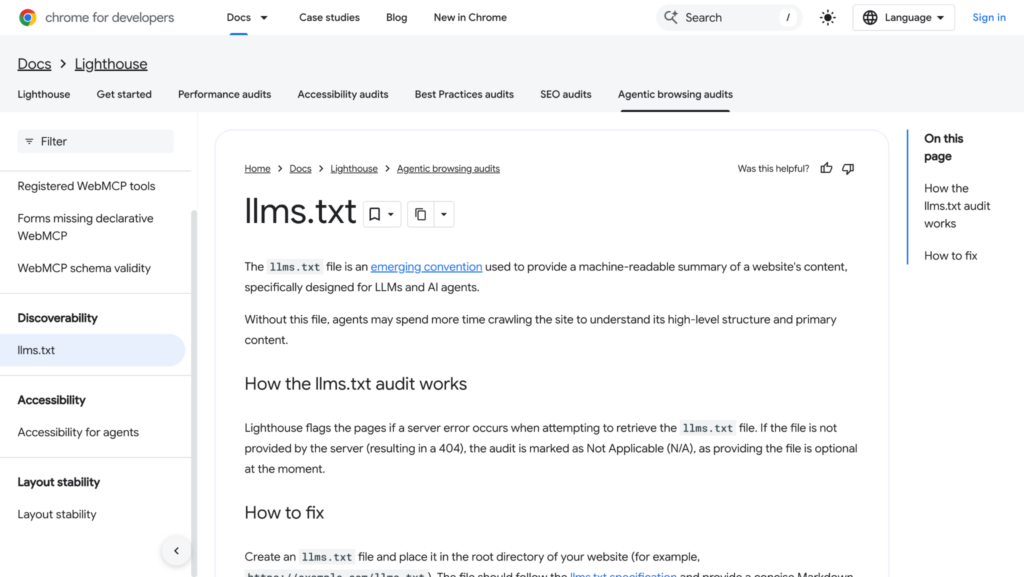
However, there’s the Google AI optimization guide that says that LLMS.txt is not needed, and this has made SEOs and AEOs even more confused:
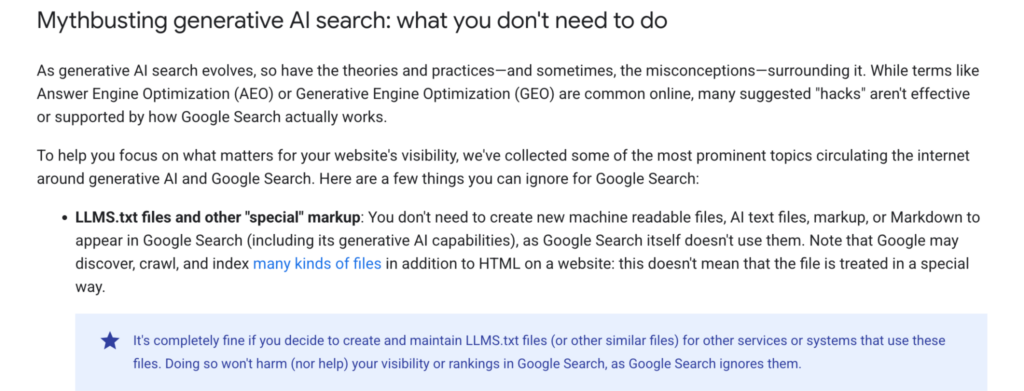
One thing is clear from the AI optimization guide: LLMS.txt is ignored by Google Search, and we know that Google AI Overviews derives its data from Google Search (for the most part). So, Google’s AI Optimization guide is right.
HOWEVER, that is for Google Search and its AI features, not for generative AI responses from Claude, ChatGPT, Perplexity, and others.
If the purpose of LLMS.txt is to speed up crawling for AI agents, that is fine. However, if it is to ensure all your pages are crawled, it is unlikely to help you meet that goal.
Generative AI was built at a time when the default for crawlers was the use of sitemaps. It is a long-established web standard. For any crawler that’s building an index, consuming sitemap.xml is the obvious thing to do.
llms.txt was proposed in late 2024 as a convention for giving LLMs a curated, human-authored map of a site’s most important content. Although many websites have adopted it, SEO tools recommend creating one, and documentation platforms like ReadMe generate it automatically, there is no proof that it is needed.
You might have seen the blog on SEroundtable stating that OpenAI bots request /llms.txt, but fetching a file doesn’t prove it’s used for ranking, retrieval, or response generation. Also, bots can fetch any file/page on any site any number of times.
Nevertheless, it does not hurt to create an llms.txt; you can do so if you feel it’s safer, but do not expect it to be the one thing that makes a big difference.
7. Strengthening trust and authority signals
EEAT also works for AEO. You need to demonstrate expertise and credibility through tone, evidence, and verifiable resources. Here’s what to focus on for authority building with AEO:
- Authoritative tone: Write in a confident voice that conveys subject mastery. Avoid unnecessary jargon.
- Citations and external validation: Support factual claims with links to reputable external sources. For instance, “According to the Federal Trade Commission’s 2023 guidelines on online advertising”, rather than passive or generalized attributions. This precision signals to LLMs that the information is traceable, reducing the likelihood of misinterpretation in future citations or summaries.
- Verifiable data: Include up-to-date statistics, official figures, or clearly attributed insights that readers can cross-check. Specify publication dates or research origins when possible to reinforce transparency.
- Structured data markup: Use schema to identify the author of the content and build the profile of that person. Also, use a schema for key content sections, such as FAQs or how-to steps, to help answer engines surface responses more accurately.
8. Prepare your brand for AI search visibility
You need to ensure your business’s branding, credibility, and digital footprint work together to present a unified and authoritative presence to AI systems. LLMs reference signals across the web to determine which brands display consistent expertise, structured knowledge, and trustworthiness. Strengthening those signals helps a business become more visible and recognizable in AI-powered answer engines and conversational search results.
In addition to the AEO strategies mentioned above, ensure you do the following:
8.1. Align branding and credibility for consistent recognition
Modern AI models analyze not only what an organization says about itself but also how that identity is represented across sources. Every piece of published content, author profile, and online interaction contributes to the brand picture. Achieving alignment means ensuring that your name, mission, and values are reflected consistently across your website, knowledge panels, professional bios, and social channels.
So, do this:
- Use a consistent brand name, tagline, and logo across all digital properties.
- Maintaining a uniform tone of voice and messaging that reinforces your brand’s purpose.
- Creating verified profiles for your brand and key team members on professional directories and social platforms.
- Linking all digital assets to the same official domain and contact sources to help AI systems associate signals correctly.
8.2. Reinforce unique expertise and subject authority
AI prioritizes recognized experts and entities that demonstrate a deep understanding of the topic over time. A company building authority online must go beyond promotional posts and publish information that shows professional credibility and original insight.
Ways to strengthen perceived expertise include:
- Publishing thought-leadership articles and guides written or reviewed by qualified experts in the field.
- Clearly displaying author credentials and organizational qualifications.
- Creating detailed resource hubs or knowledge bases that reflect consistent topical depth.
- Earning references or mentions from respected industry websites and partners.
- Engaging in professional collaborations, interviews, or public discussions that highlight practical experience and unique insights.
8.3. Develop structured brand knowledge for AI comprehension
AI relies on context-rich data to identify, categorize, and summarize information about organizations. Providing structured, verifiable brand data improves how search engines understand your entity and the relationships associated with your offerings.
Effective methods include:
- Maintaining an About page with accurate corporate details, founding story, leadership bios, and mission statement.
- Implementing schema or structured metadata that defines your brand as an entity, connecting pages, products, and locations.
- Keeping business listings consistent on major directories such as Google Business Profile, LinkedIn, and industry platforms.
- Submitting accurate company descriptions to data platforms and databases that AI systems often draw from.
- Hosting downloadable resources, white papers, or case studies that showcase proprietary research or achievements.
8.4. Strengthen online reputation and trust signals
Trust remains the cornerstone of AI citations, especially when searching for a service or product.
For such searches, AI tends to draw on user reviews, social proof, or independent mentions to assess your credibility and citability.
Controlled reputation management ensures that what AI detects aligns with your brand’s desired perception.
Focus on:
- Encouraging verified customer reviews and responding professionally to feedback.
- Monitoring brand mentions across media, community forums, and social discussions.
- Collaborating with credible news outlets and partners to secure positive third-party mentions.
Customers tend not to leave public reviews unless the service is negative or overwhelmingly positive. So, in addition to providing a good product or service, also provide incentives to customers to leave reviews. Incentives can include a percentage off the next purchase, a gift card, a win-win brand mention on your website, etc.
Regarding news outlets, we have made it easy to be mentioned in them with the Konvart Digital PR tool. With this tool, you see requests from journalists and media outlets who are willing to cite and link to you in exchange for a comment or interview on a topic that is relevant to your expertise or industry.
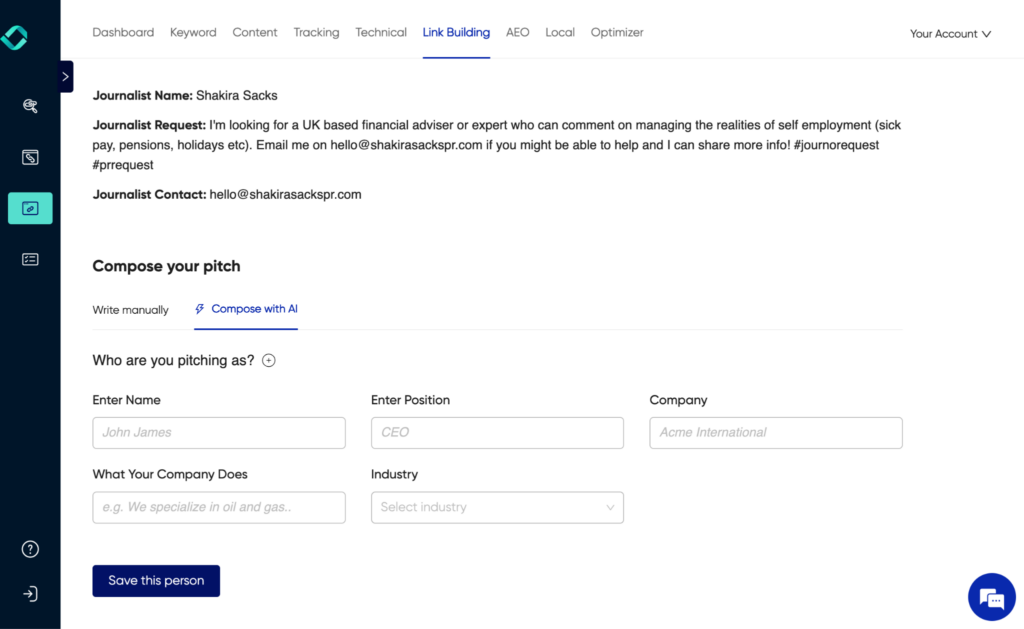
Konvart has made it easy by showing only requests relevant to your expertise and industry.
Answer Engine Optimization and Monitoring
Before we discuss how to track results from AEO, you must understand that tracking AEO results can sometimes be like tracking a ghost.
AI models often aggregate insights from vast amounts of indexed data, referencing content without direct links or measurable user interactions. This creates what some describe as “ghost traffic,” where brand content informs an answer but the originating site sees no tangible signal of engagement.
Even when a citation appears, algorithms may format or truncate it in ways that make tracking nearly impossible.
When there’s a link, most LLMs add a UTM source to that link so you can see the attribution in Google Analytics, but seeing that as a click requires the user to click on a link within the chat with the AI. That means brand mentions or links seen without a click cannot be tracked.
An increase in direct traffic and brand searches can be attributed to AEO, but not 100%, as activity on other digital marketing channels, such as social media, can contribute as well.
Even when the click is trackable (via UTM Source and Google Analytics), the chat data is missing, so you cannot synthesize the outputs.
Brands may create high-quality, contextually rich content aligned with user intent, only to find that their presence in generative responses remains untraceable. Without dependable data loops, insight into performance becomes more interpretive than empirical, observable patterns rather than measurable metrics.
When ChatGPT opened its ads to brands in the USA, we found that in many cases, the ad was presented seven interactions deep, meaning:
User asks ChatGPT a question > ChatGPT responds > User asks follow-up question > Chat responds > User asks follow-up question > ChatGPT responds > User asks follow-up question > ChatGPT responds > User asks follow-up question > ChatGPT responds > User asks follow-up question > ChatGPT responds > User asks follow-up question > ChatGPT responds and the ad is provided in this response.
How do you track the entire flow to understand the user’s intent up to the click? The conversations/queries asked, etc.? That is currently impossible to track.
Right now, even the query alone cannot be accurate. That said, we have found ways to reverse-engineer the chat and track visibility for key searches, and would explain that in the next step.
Measuring and tracking AEO success
Tracking performance starts by identifying quantifiable data points that reflect engagement, authority, and search behavior shifts resulting from answer-driven visibility:
- Brand citation: Monitor the mention of your brand or domain name in AI-generated responses or conversational results for key service/product queries. Brand name mentions are a strong indicator of improved AEO visibility.
- Traffic influenced by AI responses: This is referral traffic that originates from clicks in AI environments.
- Engagement quality from answer-driven users: Evaluate dwell time, pages per session, and conversion rates of visitors who arrive after clicking on a link from an AI source
- Impression share in answer boxes: Track the number of times your pages appear in AI summaries vs other links.
- Query depth and coverage analysis: Review how your optimized content performs across long-form conversational and natural language queries.
Tools for tracking AEO
The tools you use depend on what you want to track.
You can track brand citation using Konvart’s AEO tool.
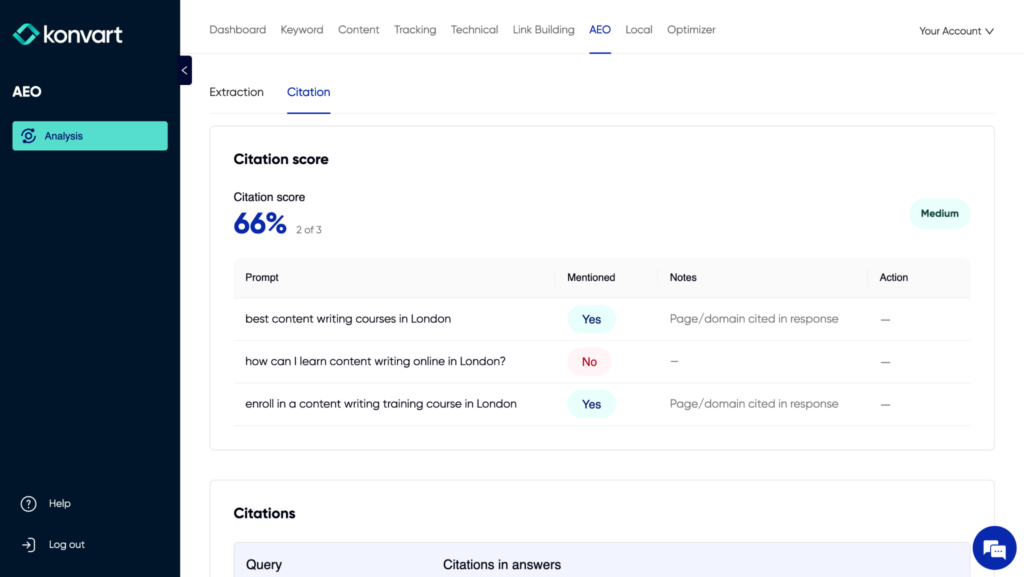
The citation tab tells you whether your brand or URL is cited in an AI’s response. This tool covers all key pages in your sitemap, including the product, service, and home page, as well as any other key pages determined by the system. Konvart reverse-engineers the searches that drive clicks and checks whether your brand/URL appears in the response. You also see the other URLs mentioned for each query, so you can understand your impression share.
Traffic influenced by AI responses and the quality of engagement from answer-driven users can be tracked in Google Analytics. For example, here is data from Google Analytics showing user acquisition from ChatGPT.
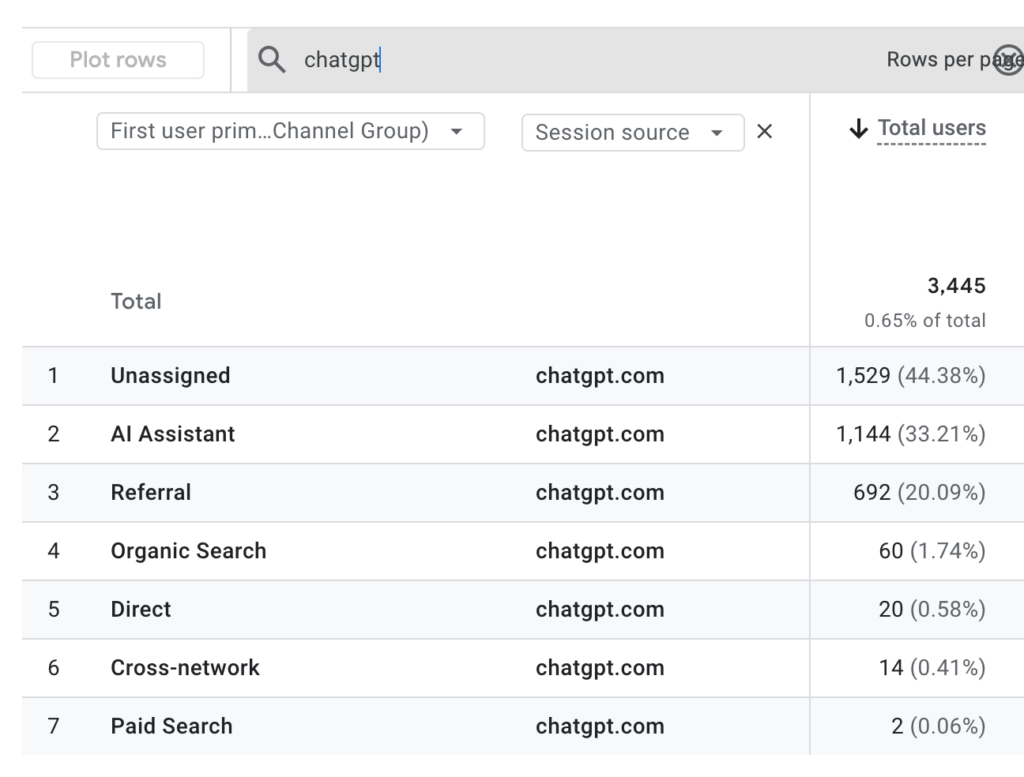
On the same screen, you can see the average time per user and any conversions (if you have conversion tracking set up in Google Analytics). In GA, you can also use the Explore feature to check the path exploration and see which pages users visited after the initial URL they entered.
For query depth and coverage, you need to benchmark topical coverage against competitors, and you can do that with Konvart’s Content Editor.
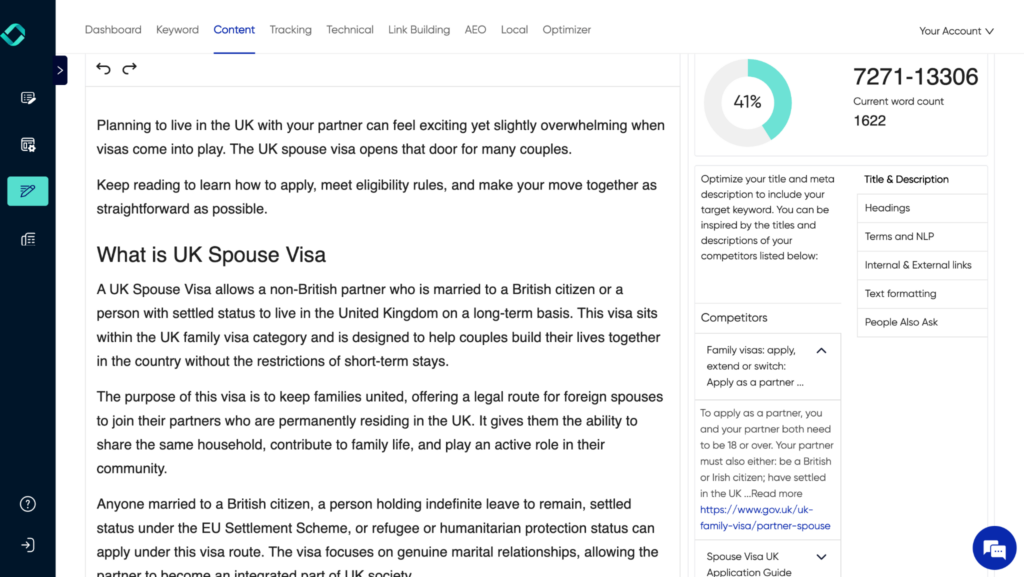
Embed verification and iteration steps in SEO reporting workflows
Once AEO principles are added to your SEO framework, continuous improvement becomes crucial. Use your existing analytics and reporting systems to assess performance under an AI-augmented lens.
Measure visibility in Featured Snippets and generative search previews alongside traditional ranking metrics. You can do this with a good rank-tracking tool like Konvart’s. You can see the SERP feature you rank for in the rank tracker. This should tell you if you are mentioned in a Google AI Overview.
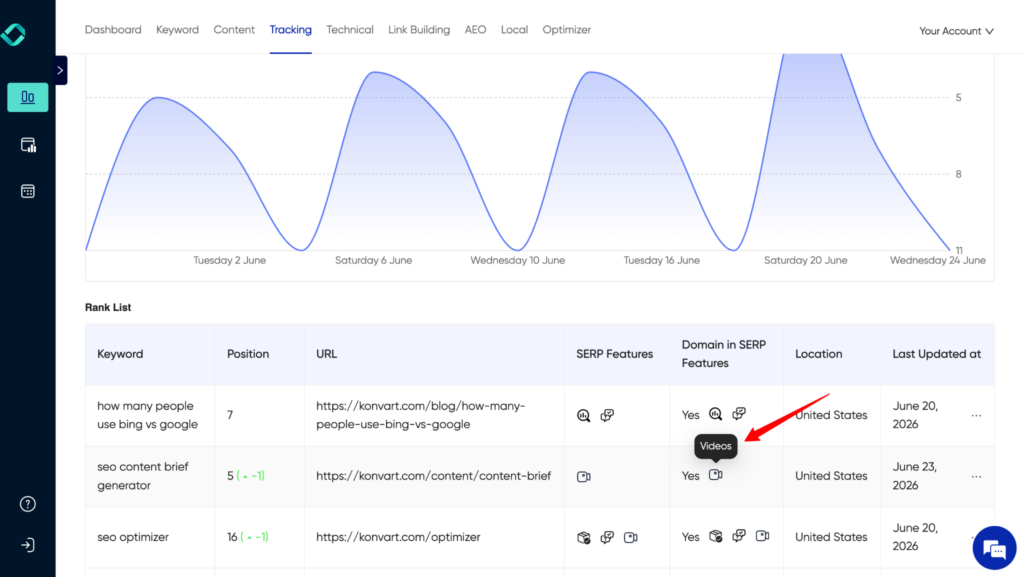
Another point is Google Search Console. Monitor the health of structured data through Google Search Console enhancements and correct markup errors promptly.
Lastly, check for an increase in brand searches and traffic. For the former, you’ll need Google Search Console. Filter by query using your brand name.
For the latter, check Google Analytics. Check for two things:
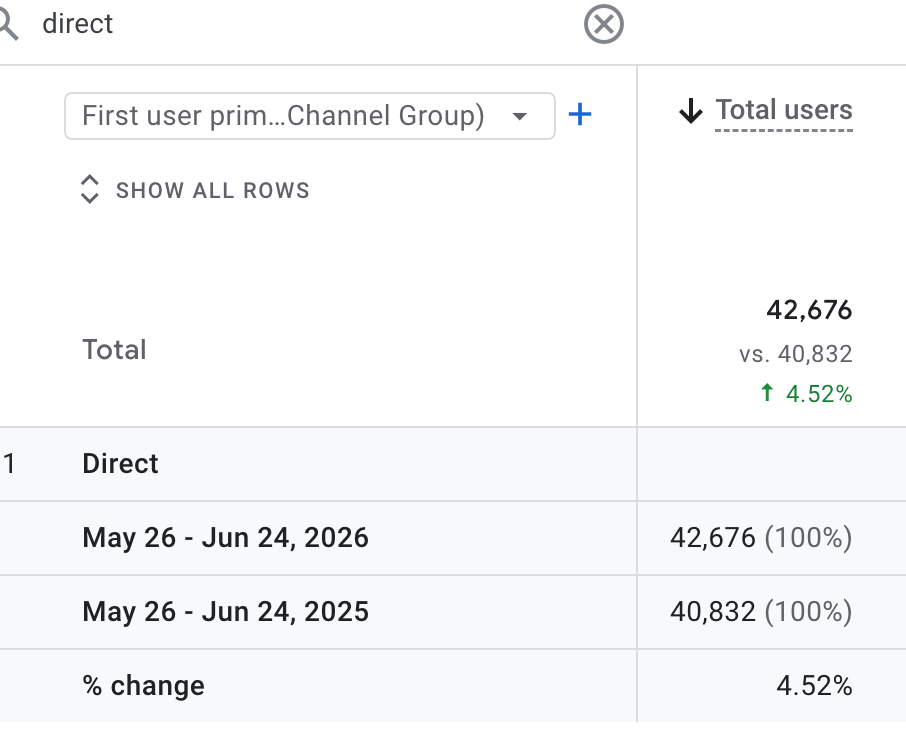
- Direct traffic, especially for direct traffic to your home page.
- Traffic from AI assistants.
Direct traffic is pretty simple, as that is already a view in Google Analytics:
AI Assistants are also a view. You can also use source/medium. You can also use the session source to drill down to the platform.
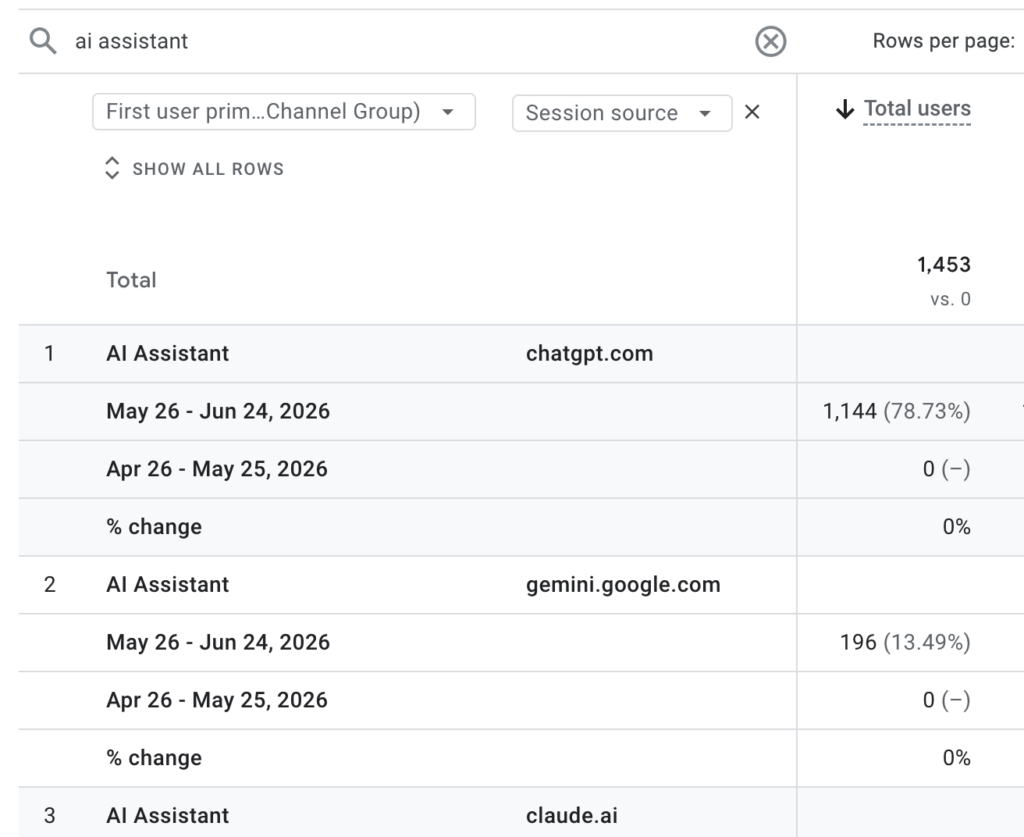
Do note that the AI Assistant group is not always accurate, so also filter by session source. For example, the above result for ChatGPT shows 1,144, whereas for the same period, it is 3,445 when we account for the other media with which ChatGPT is grouped.
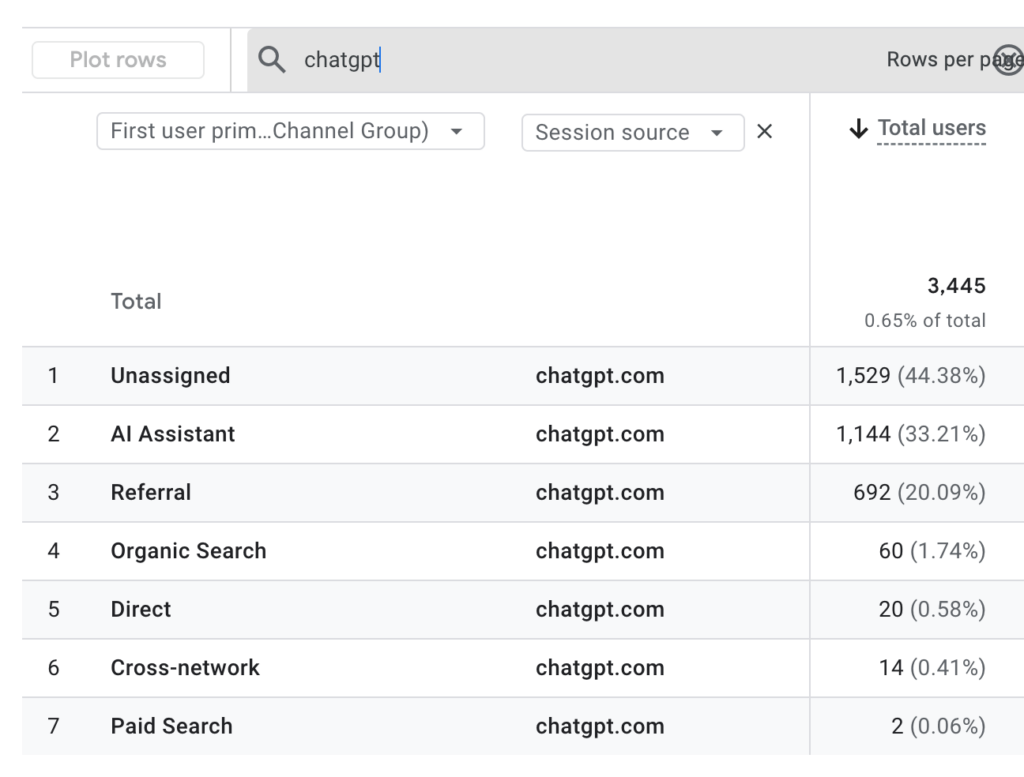
Yes, Google Analytics grouped ChatGPT in paid search when it wasn’t paid search. Direct, organic search was also impacted.
Don’t forget to incorporate this data into monthly or quarterly SEO audits so that AEO readiness moves with algorithm updates and new AI behaviors.
What’s the best answer engine optimization tool?
For all-around AEO, Konvart is the best answer engine optimization tool. It provides all the features you need to analyze, optimize, and track your AEO. Snippets of these have been provided above. With Konvart, you get:
- AI extractability check and citation tracking in its answer engine optimization tool
- Schema optimization and gap check in its technical gap tool
- Content coverage and optimization in its content editor
- Media mentions for authority and brand strength with its digital PR tool
If you are still considering tools, here’s what to look out for:
Structured data tools
Structured data tools simplify the process of tagging content with accurate entities, relationships, and attributes, allowing search and answer engines to interpret information contextually rather than solely by keywords.
When assessing structured data tools, focus on:
- Schema coverage: Verify that the tool supports a wide range of schema types relevant to your business, including organization, product, FAQ, and article structures.
- Validation and error reporting: Choose options that check syntax validity, detect missing properties, and simulate how Google or Bing reads markup.
- Integration flexibility: It is a plus if the tool integrates with your current content management system and scales across multiple URLs or directories.
AI visibility monitors
AI visibility monitoring systems track how your content appears in AI-generated results. Since answer engines use machine learning to surface concise, authoritative content, these tools identify where your pages are being referenced or summarized and help you understand which pieces are favored by AI-driven interfaces.
Key features to consider when selecting an AI visibility monitor include:
- Coverage scope: Look for coverage across multiple AI platforms.
- Query intent mapping: Helps you understand which user questions trigger your content to appear as answers.
- Alert functionality: Provides updates when your content gains or loses visibility within AI responses.
- View of competitors: provides you with the list of brands/URLs that were mentioned in the AI response to that query.
Content scoring systems
Content scoring systems analyze how well a web page aligns with intent-focused optimization. Such tools measure structural readability, entity relevance, and topical authority, all key components of AEO success. They often pair natural language processing (NLP) with machine learning to recommend improvements that increase the likelihood of being selected as a high-confidence source in AI-driven results.
Evaluate content scoring systems based on:
- Linguistic depth: Choose systems that evaluate entities, sentiment, and contextual alignment beyond surface-level keywords.
- Intent categorization: Ensure the scoring method can distinguish among informational, transactional, and navigational intent to optimize content for the right purpose.
- Content coverage analysis: Prioritize systems that assess full coverage of the topic against expectations.
- Ease of interpretation: Reports should clearly highlight actionable improvements for layout, language clarity, and schema implementation.
Brand strength building
This should be a core part of your AEO strategy. It includes helping you secure media mentions in top publications such as the Financial Times, Reuters, and CNN, checking your brand sentiments on forums like Reddit, and a customer review optimization platform, such as a local map listing optimization software that checks your reviews against competitors (aggregate, numbers, sentiments) and provides suggestions to improve them.
What is the difference between Answer Engine Optimization and Generative Engine Optimization?
When AEO and GEO (Generative Engine Optimization) first became mainstream, they were treated as two different things.
At the time, AEO focused on improving how digital content is structured, written, and presented so it can be clearly understood and accurately used by AI-driven answer systems, including Google’s generative search features, voice assistants, and conversational AI platforms that directly respond to user questions. In contrast, GEO was limited to optimizing content for generative AI models, such as large language models (LLMs), that create new, synthesized responses, basically how content trains or influences the model’s generated outputs through comprehensive, credible, and semantically rich information.
However, now they are used interchangeably for the same thing: optimizing to ensure that your brand is cited or your URL linked as a source, or in the response of an LLM/AI system like ChatGPT, Perplexity, Gemini, or Claude.
Whether you call it AEO or GEO, the point is: clear, credible, and helpful content designed for machines that interpret intent rather than only match keywords; a website that an AI crawler can crawl, see content, index the content, and cite the content/URL; a brand that is strong enough to be deemed citable in AI answers.
Konvart helps brands stay ahead in this AI search era. Our tools streamline your Answer Engine Optimization strategy, ensuring your content is discoverable, credible, and cited. Explore how Konvart can elevate your business visibility by signing up today.