A few months into SEO, most founders hit the same wall. The pages have been updated, a few blog posts are live, and maybe someone is working on links.
But the traffic chart looks almost the same as it did when you started. So how long does SEO take to work, and how do you know if it’s working at all?
For most established websites, the first signs show up within three to six months. Meaningful traffic and leads usually take six to twelve.
New websites and competitive markets take longer.
But a single range isn’t much use when you’re the one waiting. So this guide breaks the timeline down by where your site is starting from, the type of work you’re doing, and the milestones you can check in Search Console each month.
By the end, you’ll know whether your SEO is on track, just slow, or due a change of direction.
How Long Does SEO Take to Work?
For most websites, SEO takes four months to a year to show clear results. That’s not just an industry rule of thumb. It’s also what Google tells business owners.
In its guidance on hiring an SEO, Google says to expect results in four months to a year, counting from when you start making changes.
The reason it’s a range, not a single number, is that SEO is several processes running at once. Google has to find and re-read your pages.
So, your improvements have to go live, and some of them take longer to build than others.
Then your pages have to earn a place against competitors who are working on the same searches.
Where you land in that range depends on three things:
- Where your site is starting from: An established site that already gets some search traffic moves much faster than a brand-new domain.
- What kind of work you’re doing: Fixing a page Google can’t index can pay off in weeks. Building authority with links takes months.
- How competitive your market is: A local bakery competes with a few dozen sites. But a project management app competes with some of the biggest brands online.
So “it depends” is true, but it isn’t much help when you’re the one waiting.
A more useful question is whether your site is making the right kind of progress for this stage. And that starts with knowing what progress actually looks like.
What “SEO Working” Actually Looks Like
Most people judge SEO by traffic. But traffic is one of the last things to move.
Long before visits increase, Google has to index your pages, start showing them in results and gradually move them up.
If you only watch traffic, the first few months look like nothing is happening, even when SEO is working exactly as it should.
A better way to judge progress is to look at milestones. Each one builds on the one before, and you can check most of them for free in Google Search Console:
| Milestone | What you’ll see | Where to check | Typical timing (established site) |
| 1. Pages indexed | Your important pages are listed as indexed | Search Console, Pages report | Days to a few weeks after publishing or fixing a page |
| 2. Impressions rising | Your pages appear in more searches, even if few people click yet | Search Console, Performance report | 1 to 3 months |
| 3. Rankings moving up | Average position improves, with target keywords reaching positions 11 to 20 | Search Console, Performance report (Average position) | 2 to 4 months |
| 4. First page-one rankings | Some keywords reach the top 10, usually the less competitive ones first | Search Console or a rank tracker | 2 to 6 months |
| 5. Clicks growing | More visits from Google to the pages you’ve worked on | Search Console, Performance report (Clicks) | 4 to 8 months |
| 6. Leads and sales | More enquiries, sign-ups or orders from organic search | Google Analytics, key events by channel | 6 to 12 months |
These timings are typical for a site that’s been live for a while. New sites usually take longer at every stage.
If you’re stuck at the first milestone and your pages aren’t being indexed, nothing else can happen until that’s fixed.
Our guide on why your website isn’t showing up on Google walks through the most common causes.
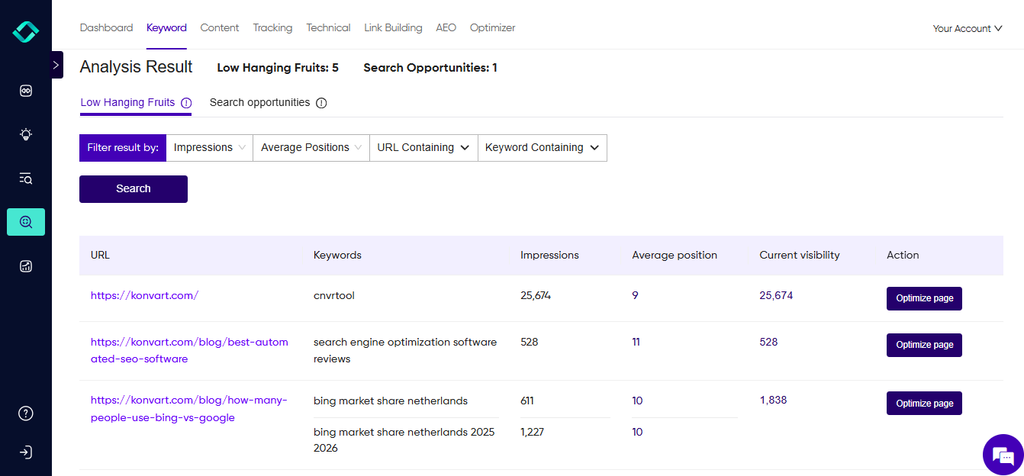
Alos, milestone 3 is where the quickest wins usually hide.
A page sitting in positions 5 to 20 already has Google’s attention and often needs only a few improvements to reach the top of page one.
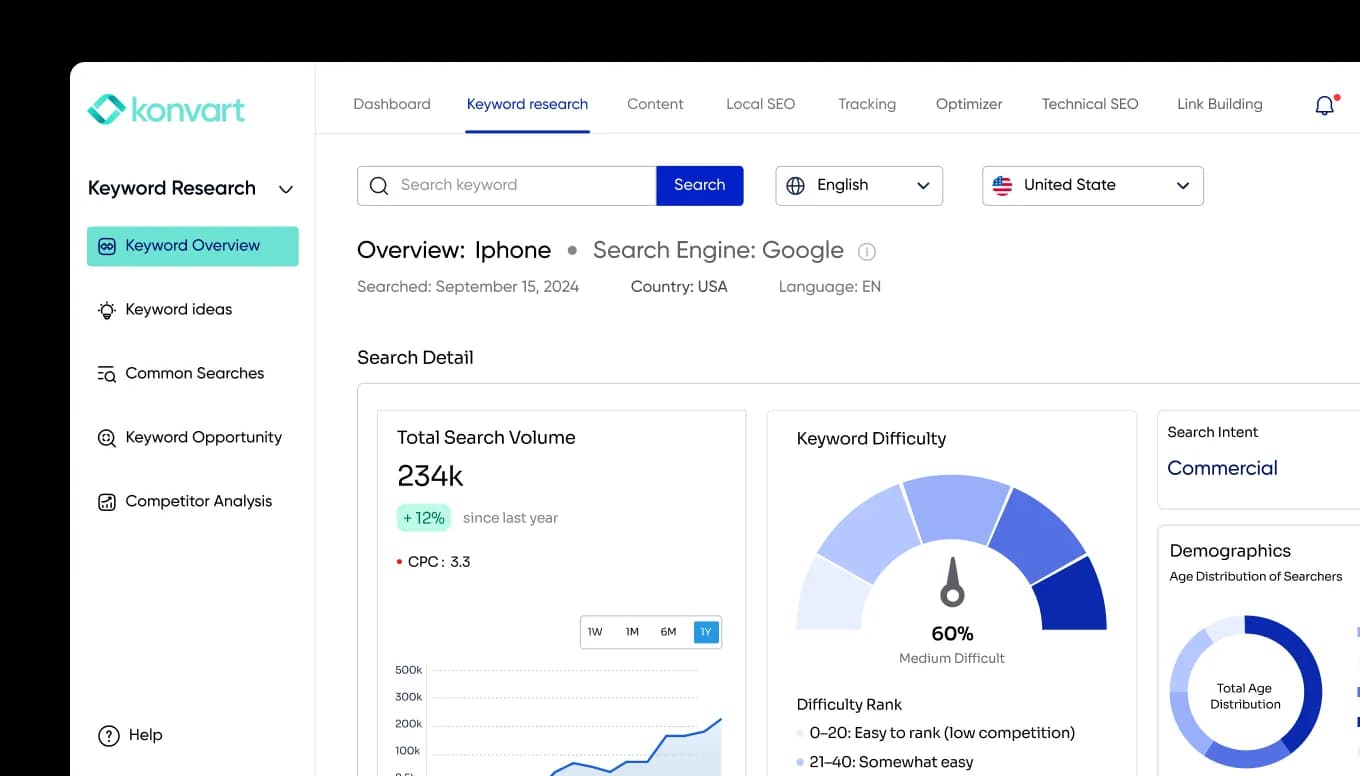
Keyword Opportunities in Konvart pulls these pages and queries from your Search Console data, so you can see which ones are closest to breaking through.
SEO Timelines by Starting Point
Two businesses can follow the same SEO plan and see results months apart. Usually, the biggest reason is where each site started.
A site Google already knows and trusts has a head start that a brand-new domain has to earn.
So, here’s how the timeline typically changes depending on your starting point:
| Starting point | First signs | Meaningful traffic and leads |
| Brand-new website | 2 to 4 months | 9 to 18 months |
| Established site with little SEO so far | 2 to 4 months | 6 to 12 months |
| Site already getting impressions | A few weeks to 3 months | 3 to 6 months |
| Local business | 1 to 3 months | 3 to 9 months |
| Highly competitive market | 3 to 6 months | 12 months or more |
1. Brand-new website: A new skincare brand launching its first website starts with no history, no backlinks and no track record with Google. Its pages can be indexed within days, but Google needs time to trust the site enough to rank it for searches that bring real customers.
Expect early impressions for your brand name and very specific searches, then slow growth as you publish content and earn your first links.
2. Established site with little SEO so far: An accounting firm with a five-year-old website has an advantage, even if nobody has worked on its SEO. Google already crawls the site, and it may have a few links from clients or local directories.
So, fixing the basics and improving key service pages often brings visible movement within a few months.
3. Site already getting impressions: A software company whose pages already appear on page two of Google is in the best position of all.
Those pages only need to climb a few places, so improving them can show results in weeks rather than months.
This is why the quickest wins in SEO almost always come from pages that are already close.
4. Local business: A plumber competing for “emergency plumber in Leeds” is up against a few dozen local businesses, not the whole internet.
An accurate Google Business Profile, a solid service page for each area and steady reviews can bring results relatively quickly.
A local rank tracker shows how you appear in map results across your area, not just from one spot.
5. Highly competitive market: A new fintech app targeting “best budgeting app” is up against household names with years of authority. Rankings for broad terms like that can take a year or more.
The faster path is to start with specific, lower-competition searches and build toward the bigger terms over time.
The type of work you focus on matters just as much as where you start.
How Long Each Type of SEO Work Takes to Show Results
SEO isn’t one thing. It’s a mix of very different jobs, and they don’t all move at the same speed.
Think about it like getting fit. Drinking more water makes you feel better within days. But building real strength takes months of steady training.
Both are part of the same goal, but nobody expects them to pay off on the same schedule.
SEO works the same way.
Fixing a page Google can’t see can help almost immediately. Earning the kind of authority that wins competitive searches takes much longer.
This matters because it changes how you read your results. If you’ve spent three months on link building and rankings have barely moved, that’s normal.
If you fixed a major indexing problem three months ago and nothing has changed, then that’s worth looking into.
Here’s roughly how long each type of work takes:
| Type of work | How soon Google notices | When results usually show |
| Fixing an indexing or technical blocker (such as a stray noindex tag or a blocked page) | Days to a couple of weeks, once the page is re-crawled | A few weeks to 2 months |
| Rewriting title tags and meta descriptions | Days to a few weeks | 2 to 6 weeks, mostly in click-through rate |
| Improving an existing page | 1 to 4 weeks | 1 to 3 months |
| Publishing a new page | Days to a few weeks to be indexed | 3 to 6 months, longer for competitive searches |
| Improving page speed | Search Console’s Core Web Vitals report uses 28 days of real-user data | About a month to show in the report, with small ranking effects |
| Earning backlinks | Weeks, as Google finds the linking pages | 2 to 6 months |
| Updating your Google Business Profile | Within days | A few weeks to 3 months for map results |
A few of these deserve a closer look.
1. Technical fixes are often the fastest wins: If an important page has been accidentally hidden from Google, fixing it can bring that page back into search results within weeks.
A site audit flags these blockers across your whole site, so you don’t have to check pages one by one.
Konvart also checks that your sitemap is in place and submitted in Search Console, so new and updated pages get found sooner.
2. Content takes longer than most people expect: A new page can be indexed within days and still take months to rank.
Google needs time to see how it compares with other pages and how people respond to it. And updating a page that already ranks is usually much quicker than starting from scratch.
3. Links are slow, but they compound: Each good link takes time to earn and time to count. But links keep working long after you’ve earned them, and they help every page on your site, not just the one they point to.
If you’re new to the idea, here’s what backlinks are and why they matter.
Put these together, and you get a timeline that unfolds in stages over the course of a year.
A realistic month-by-month SEO timeline
Knowing the overall range is helpful. But when you’re in month three, staring at a traffic chart that’s barely moved, what you really want to know is: “Is this normal right now?”
Here’s what a typical first year looks like for an established site with consistent SEO work: what you should be doing, what you can expect, and what isn’t worth worrying about yet.
If you’d like the full step-by-step process behind it, our guide on how to do SEO yourself covers each task in detail.
Here’s the quick answer for an established site with steady SEO work:
| Stage | What you’re doing | What you’ll notice | What’s still normal |
| Months 1 to 2 | Setting up tools, fixing technical problems, choosing your core pages | Hidden pages reappearing in Google, little else | Flat traffic |
| Months 3 to 4 | Improving core pages, publishing content, starting on links | Impressions rising, keywords moving onto page two | No new leads yet |
| Months 5 to 6 | Pushing pages closest to page one | First page-one rankings, clicks starting to grow | Big keywords still out of reach |
| Months 7 to 12 | Rotating in new priority pages, keeping up content and links | Steady traffic growth and regular leads | Week-to-week ups and downs |
| Month 12+ | Targeting harder keywords, refreshing older pages | Growth building on itself | The occasional plateau |
Timelines make more sense when you can picture them. So here’s how that first year played out for one business.
A year of SEO for a physiotherapy clinic
Months 1 and 2: “Is anything happening?”
The clinic’s website had been live for six years, but nobody had worked on its SEO. The first month went on setup: connecting Search Console, fixing a contact page Google couldn’t index, and choosing 12 core pages.
These included the homepage, one page for each treatment, and a page for each of its two locations.
By the end of month two, traffic looked exactly the same. That was expected.
Months 3 and 4: The first signs.
After the treatment pages were rewritten to answer what patients actually search for, impressions started climbing.
“Sports massage in Bristol” moved from page four to page two. No new bookings yet, but Search Console showed Google was paying attention.
Months 5 and 6: Page one, finally.
The more specific pages broke through first. “Physio for runner’s knee in Bristol” reached position 6, then 4.
A handful of bookings came in from people who found the clinic through Google. That was small, but it was proof it was working.
Months 7 to 12: It starts to feel worth it.
With several treatment pages on page one, the clinic swapped them off its priority list and added new ones, including a page on back pain for desk workers.
Links from a local running club and a health directory helped. By month ten, organic search was its second-biggest source of new patients.
Month 12 and beyond: Momentum.
The pages that ranked kept earning attention, and new pages climbed faster than the first ones had.
“Physiotherapist in Bristol,” the most competitive search of all, was finally in reach.
If you’d like the step-by-step process behind a year like this, our guide on how to do SEO yourself covers each task in detail.
What Makes SEO Faster or Slower
If two businesses start SEO on the same day, why does one see results in four months while the other is still waiting a year later?
It’s rarely luck, and it’s rarely about who has the “better” SEO tactic.
Most of the gap comes down to a handful of factors. Some are baked into your business and market. Others depend entirely on how you run your SEO from week to week.
So, it helps to split them into two groups: the factors you can’t change overnight, and the ones you can.
The first group tells you how realistic your timeline is, while the second tells you how to shorten it.
Let’s look at them.
The factors you can’t change overnight
1. How established your site is: A site that’s been around for years, with a few links and a history in Google, starts with a real advantage.
Google already knows it, crawls it regularly and has some reason to trust it. But a brand-new domain has to build all of that from zero.
You can’t speed up time, but you can make sure every month counts, so the trust builds as quickly as possible.
2. How competitive your market is: Ranking for “family lawyer in Swindon” and “best CRM software” are completely different challenges. The first puts you up against a few dozen local firms.
The second puts you up against some of the biggest software brands in the world, with large content teams and years of links behind them.
The more established businesses competing for the same searches, the longer it takes to earn a place among them.
3. Your current authority: Sites with more quality links pointing to them tend to rank new pages faster, because Google already treats them as a trusted source.
Any site can build authority, but it happens over months, not weeks. That’s why newer sites usually see their first wins on specific, less competitive searches.
The factors you can control
1. How quickly changes actually go live: This is the most underrated factor on the list. An SEO plan that sits in a queue for two months adds two months to your timeline, and Google never even sees the delay.
The most common holdups are:
- waiting for a developer to make technical fixes
- drafts sitting in review for weeks
- approvals from several people before anything is published
- outreach emails that never get followed up
Tools that can apply changes directly to your site remove much of that waiting. Our roundup of automated SEO software compares the options.
2. How consistent you are: SEO rewards steady effort more than bursts. Publishing four articles in January and nothing until June will usually move slower than one solid article every month.
Steady work gives Google regular reasons to re-crawl your site and reassess your pages, and it gives your content and links time to build on each other.
3. How well your pages match what people want: A page that answers the search better than anything else will rank faster than one that simply repeats the right keywords.
So, before you write or rewrite a page, search your keyword and look at what already ranks.
If the top results are product pages, a blog post will struggle, however well it’s written. If they’re in-depth guides, a short sales page won’t keep up.
4. How healthy your site is technically: Technical problems slow down everything else you do.
The ones worth checking first are:
- important pages that aren’t indexed
- slow loading, especially on mobile
- broken links and long redirect chains
- pages blocked from Google by mistake
Fixing these early clears the way, so the rest of your work can show up in results.
The good news is that the second group usually outweighs the first.
You can’t change your market or your site’s age, but you can change how quickly and consistently you act.
How Long Does it Take to Show up in AI Search?
More of your customers now skip the search results entirely. They ask ChatGPT, Gemini or Google’s AI Overviews for a recommendation and get one answer, with a few brands and sources named.
So a fair question to add to “how long does SEO take?” is “how long until AI tools start mentioning us?”
The honest answer is that nobody can give you a reliable number yet.
AI search is too new, and the answers change too often. But what we can tell you is that AI visibility doesn’t always wait for Google rankings, and that changes where you should focus first.
In our study of 12,000 ChatGPT prompts, we compared the sites ChatGPT cited with the sites in Google’s top 10 for the same searches. They were very different lists:
- About 9 in 10 ChatGPT citations weren’t in Google’s top 10 for that search
- Only 22.5% of searches shared even one site between the two lists
- Brand product pages earned 40.7% of citations for commercial software questions, more than any other type of page
- Most cited sites had mid-level authority, not the strongest domains on the web
That’s encouraging if your rankings are still climbing.
A page doesn’t need to be in Google’s top 10 to be cited by ChatGPT. What matters more is whether it gives a clear, direct answer, and whether you appear on the sources AI tools already rely on.
So the faster levers in AI search tend to be:
- Making your product and service pages easy to quote. Say clearly what you offer, who it’s for and what it costs, near the top of the page.
- Getting listed on the directories and review sites that AI tools cite in your category, with accurate, complete profiles.
- Keeping your key facts consistent everywhere your business appears online.
One thing to expect: AI answers change from one run to the next. The same question can mention you today and leave you out tomorrow, with nothing changed on your side.
So judge AI visibility on trends across several weeks, not single answers.
That’s also why it needs tracking of its own. Your Google rankings won’t tell you whether ChatGPT is recommending you or a competitor.
Konvart’s AI visibility tracking shows which prompts you appear for, which sources AI tools cite instead of you, and the follow-up searches they run to build each answer.
Whether you’re working on Google or AI search, though, there are ways to see results sooner without cutting corners.
How to Get SEO Results Sooner (Without Shortcuts)
Everyone wants SEO to work faster, and there’s no shortage of people promising it can. Buy a few hundred links, publish fifty AI-written pages in a week, stuff your keyword into every heading.
These tactics can sometimes nudge rankings briefly, but they tend to backfire, and cleaning up after them takes far longer than doing it properly in the first place.
You can’t skip the timeline. But you can make sure you’re not adding months to it.
These six habits make the biggest difference.
1. Start with pages that are already close
A page sitting in position 8 needs a much smaller push than a page that doesn’t rank at all. Google has already decided it’s relevant. It just needs a few more reasons to put it higher.
To find these pages, open the Performance report in Search Console, switch to the Pages tab and turn on Average position.
Look for pages with plenty of impressions and an average position between about 5 and 20.
Or let Keyword Opportunities in Konvart pull them from your Search Console data for you.
Picture a garden centre whose “raised garden beds” page sits at position 11. Adding clearer product details, answering common buyer questions and linking to it from related pages could be enough to move it onto page one within weeks, while a brand-new page on the same topic would take months.
2. Fix what’s blocking Google before anything else
If important pages aren’t indexed, or a technical issue is holding the site back, nothing else you do can fully pay off.
It’s like repainting a shop while the front door is locked.
The most common blockers are:
- a “noindex” tag left on a page after a website redesign
- important pages missing from your sitemap or blocked in robots.txt
- broken links and redirects leading to error pages
- pages so slow on mobile that visitors leave before they load
Clear these in your first month, so every improvement you make after that can show up in results.
3. Focus on 10 to 20 core pages
Spreading effort across 60 pages means none of them get enough attention to move. A small improvement to every page on your site feels productive, but it rarely changes rankings.
Instead, pick the pages closest to revenue, such as your homepage, main product or service pages and any pages already getting impressions.
Work on them until they perform, then move on to the next set.
A recruitment agency, for example, might start with its four main service pages and two city pages, rather than trying to update all 50 of its old blog posts at once.
4. Give each page the right job
Product and service pages should help people buy or enquire. Blog posts should answer questions. When a page matches what searchers want, it climbs faster, and it converts once it gets there.
A quick way to check is to search your keyword and look at what’s ranking.
If the first page is full of product listings, Google thinks people want to buy, so a long article will struggle.
If it’s full of guides, a short sales page won’t keep up. So, match the format that’s already winning, then make yours better.
5. Keep up a steady pace
Regular improvements, a consistent publishing rhythm and a few new links each month beat a big burst followed by silence.
Steady activity gives Google regular reasons to revisit your site, and it lets each month’s work build on the last.
A realistic rhythm for a small team might look like this:
- improve two or three core pages a month
- publish one or two genuinely useful articles
- earn a handful of relevant links, from partners, directories or guest posts
That’s sustainable over a year, which matters far more than how much you do in a single week.
6. Shorten the gap between deciding and doing
As we saw earlier, many SEO delays come from waiting: for a developer to make a fix, for a draft to clear review, or for someone to follow up on outreach.
Every week a change sits in a queue is a week Google can’t respond to it.
Look at where work tends to stall in your business, and remove the slowest step.
That might mean giving one person sign-off on page updates, batching technical fixes into a monthly slot, or using a tool that can apply routine changes for you.
Because the faster changes go live, the sooner you’ll see whether they worked.
What this looks like with Konvart
Picture the founder of a small homeware store on Shopify, with no time to manage SEO themselves.
They enter their domain, and Konvart fills in the setup from their site: brand style, sitemap, competitors, products and target market.
They check the details, connect Search Console, and set permissions. For example, Konvart can optimize new pages automatically, but changes to existing pages wait for approval.
Konvart’s Optimizer then picks up to 20 core pages, starting with the product and collection pages closest to page one. It optimizes each one for its type, so product pages are improved as product pages, not blog posts.
It tracks every page’s progress in Search Console for 3 to 6 months. When a page hits its target, it rotates off the list and the next one takes its place.
Where a page needs authority rather than better content, Optimizer flags it for links, and Outreach Support handles the pitches, follow-ups and guest posts.
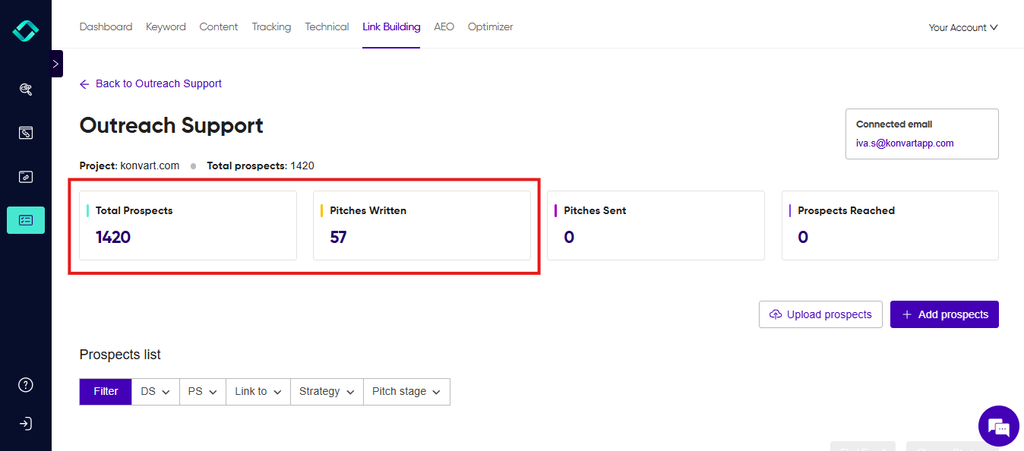
The founder’s role is mostly approving changes and adding the details only they know. The timeline is still a timeline. But the months aren’t lost to waiting.
Konvart is an all-in-one SEO platform whose Optimizer picks your most important pages, tracks their progress in Search Console over 3 to 6 months, and keeps improving them within the permissions you set.
Whichever approach you take, there’s one more question worth answering along the way: is your SEO just slow, or is something actually wrong?
Is Your SEO Slow, or Not Working? A 3, 6 and 12-month check
Waiting is the hardest part of SEO, because slow progress and no progress look almost identical from the outside.
In both cases, traffic is flat and nobody’s calling. The difference is in the details, and those details tell you whether to keep going or change course.
The good news is you don’t need to guess. At each stage of the timeline, there are specific signs that SEO is on track, and specific things to check if they’re missing.
Use this as a checkpoint at 3, 6 and 12 months:
| Checkpoint | You should see | If you don’t, check |
| 3 months | Your important pages indexed, impressions rising in Search Console, and some keywords moving up, even if they’re still on page two or three | Whether pages are actually indexed, whether technical fixes went live, and whether you’re targeting searches people really make |
| 6 months | Your first page-one rankings, clicks growing on the pages you’ve worked on, and early leads or sales from organic search | Whether the work has been consistent, whether your pages match what’s ranking, and whether competitors are simply much stronger for those keywords |
| 12 months | Organic search bringing in steady traffic and leads, and new pages ranking faster than your first ones did | Whether you’re tracking leads, not just traffic, whether you’ve been building links, and whether your keyword targets are realistic for your site |
If you’re behind at one checkpoint but making progress, that usually means SEO is working, just slowly. A newer site or a competitive market can easily add a few months to every stage.
It’s time to change course when:
- Impressions haven’t moved after three to four months of real work: That usually points to an indexing problem, or keywords nobody searches for.
- Rankings improved but leads didn’t: The pages may be attracting the wrong audience, or failing to convince visitors once they arrive.
- The work keeps stalling before it goes live: If fixes and content sit in a queue for weeks, the plan isn’t being tested at all.
- You’re chasing keywords far beyond your site’s current authority: Shift to more specific searches you can win now, and build up from there.
Whatever you find, the key is to track the right things consistently.
A monthly look at impressions, average position, clicks and conversions tells you far more than glancing at total traffic.
Konvart’s weekly rank tracking and scheduled SEO reports put those numbers in one place, so you can see at a glance whether each checkpoint is on track.
SEO Takes Time, But You Can See it Working
SEO will never be the fastest marketing channel. But it isn’t a black box either.
Once you know what progress looks like at each stage, you can stop wondering whether it’s working and start checking.
Expect the first signs within a few months and meaningful traffic and leads within six to twelve, depending on where your site is starting from.
Focus first on the pages already close to page one. Fix anything stopping Google from seeing your site, and keep a steady pace.
Then judge your progress on impressions, rankings and leads, not just this week’s traffic.
If you’d rather spend those months running your business than managing SEO, Konvart can take on the repetitive work while you decide what it’s allowed to change.
See what Konvart would do for your site, with a 7-day free trial and no card needed
Frequently Asked Questions
Can SEO work in one month?
Some changes can show results within a month, such as fixing pages Google couldn’t index or improving pages that already sit just off page one. But meaningful growth in traffic and leads rarely happens that fast. For most sites, the first clear signs appear within three to six months.
Why is my SEO taking so long?
The most common reasons are a new or low-authority site, a competitive market, pages that don’t match what searchers want, technical issues stopping Google from indexing pages, and changes that take weeks to go live. Check Search Console for rising impressions. If they’re growing, SEO is usually working, just slowly.
How long does SEO take for a new website?
A brand-new website usually sees its first impressions and rankings within two to four months. Meaningful traffic and leads often take nine to eighteen months, because Google needs time to trust a new domain. Starting with specific, less competitive searches helps a new site build momentum sooner.
How long does local SEO take to work?
Local SEO often moves faster than national SEO, because you’re competing with fewer businesses. Many local businesses see early improvements within one to three months, and steady leads within three to nine. An accurate Google Business Profile, strong location pages and regular reviews all speed things up.
When will SEO bring in leads or sales?
For an established website, organic leads and sales usually start to arrive around six to twelve months into consistent SEO work. They often begin earlier for pages that were already close to page one. Track key events in Google Analytics, so you can see leads from organic search, not just visits.
How long does it take Google to index a new page?
Google usually indexes a new page within a few days to a few weeks. Submitting your sitemap in Search Console and linking to the page from other pages on your site helps it get found sooner. You can also request indexing through the URL Inspection tool, though Google doesn’t guarantee it.
Should I stop SEO if I’m not seeing results?
Not before checking where you are on the timeline. If impressions and rankings are improving, SEO is working and stopping would waste the progress you’ve made. If nothing has moved after three to four months of real work, review your indexing, keyword targets and how quickly changes are going live before deciding.